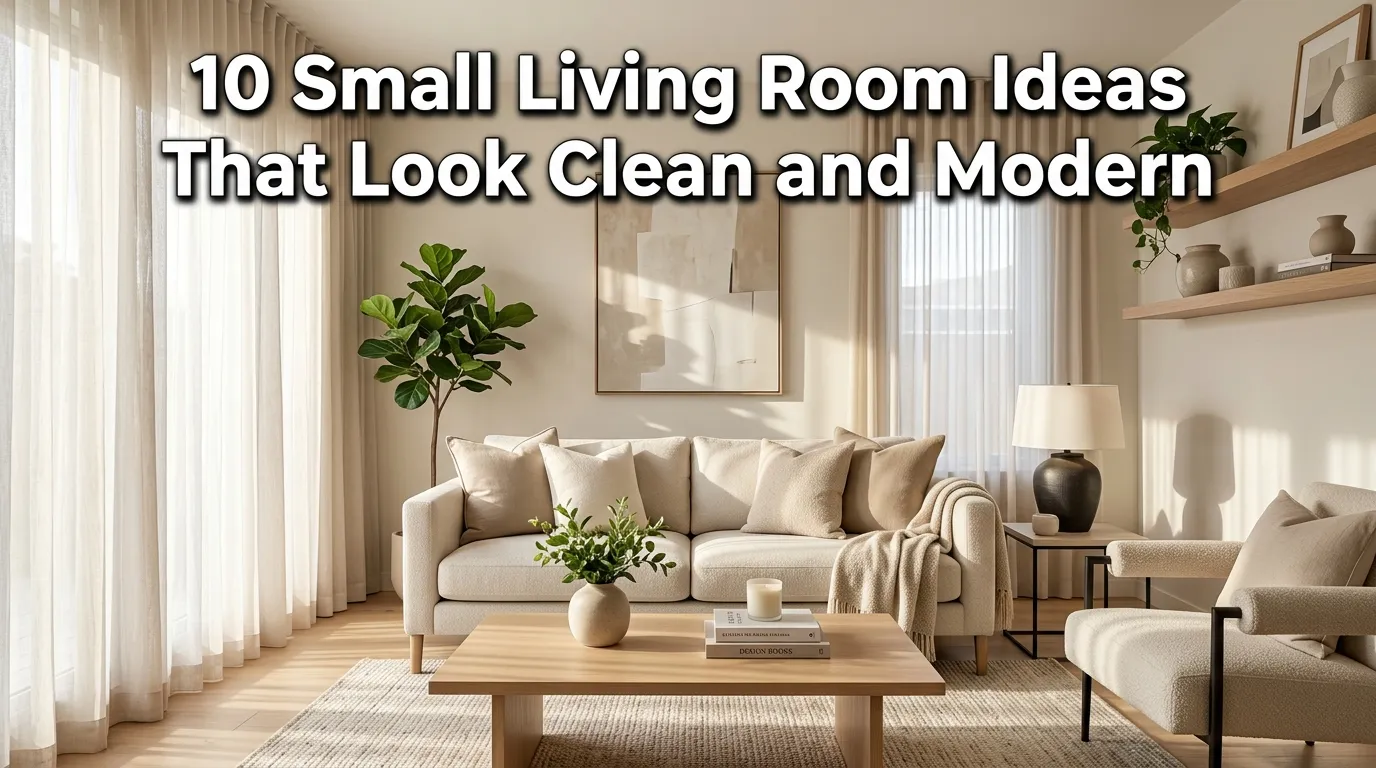
10 Small Living Room Ideas That Look Clean and Modern
A small living room can feel like a constant balancing act. You want it to look open and modern, but every extra chair, side table, or decorative object seems to eat into the space you don’t have. I’ve walked into plenty of compact living rooms that were beautifully decorated piece by piece, yet somehow still felt cramped the moment everything came together.
The truth is, a small living room doesn’t need less style—it needs smarter style. Clean, modern design isn’t about stripping a room down until it feels empty. It’s about making intentional choices with furniture scale, color, storage, and layout so the space feels calm instead of crowded.
In my experience, the living rooms that feel the most “put together” are rarely the ones with the most furniture. They’re the ones where every piece earns its place. A slim sofa instead of a bulky sectional. A rug that defines the space instead of shrinking it. Shelving that goes up instead of out. These small shifts add up to a room that looks bigger, feels calmer, and functions better for everyday life.
This guide walks through ten practical, design-backed ideas for creating a small living room that looks clean and modern without sacrificing comfort. Whether you’re working with a studio apartment, a narrow city rental, or a compact family home, these ideas are meant to be realistic—not just aspirational. You’ll find styling logic, furniture guidance, and layout advice you can actually use, along with the reasoning behind why each idea works so well in tighter spaces.
By the end, you’ll have a clear framework for approaching your own small living room, whether you’re planning a full refresh or just want to fix the one corner that’s been bothering you for months.
Table of Contents
- Light Neutral Palette – Soft, warm neutrals make a small room feel airy and visually larger.
- Multi-Functional Furniture – Pieces that do double duty free up floor space instantly.
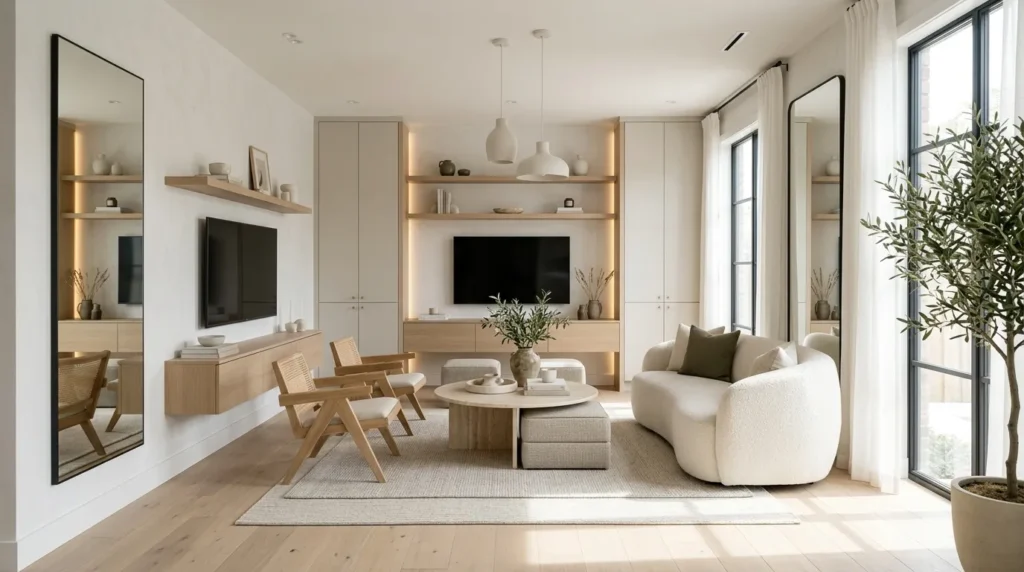
- Vertical Storage Walls – Building storage upward keeps clutter off the floor and draws the eye up.
- Mirrors For Depth – Strategic mirror placement adds light and visual depth without adding bulk.
- Slim Profile Sofas – Streamlined seating opens up walking paths and sightlines.
- Declutter Open Surfaces – Clear tabletops and counters instantly make a room feel calmer.
- Layered Soft Lighting – Multiple light sources create warmth without harsh overhead glare.
- Textured Area Rugs – The right rug anchors furniture and defines the space.
- Floating Shelf Displays – Wall-mounted shelving adds storage and style without floor footprint.
- Cohesive Color Accents – A tight, intentional accent palette keeps small rooms from feeling busy.
1. Light Neutral Palette
Quick Benefits
- Makes ceilings feel higher
- Reflects natural light
- Creates a calming atmosphere
- Works with almost any furniture style
- Prevents visual clutter
Why It Works
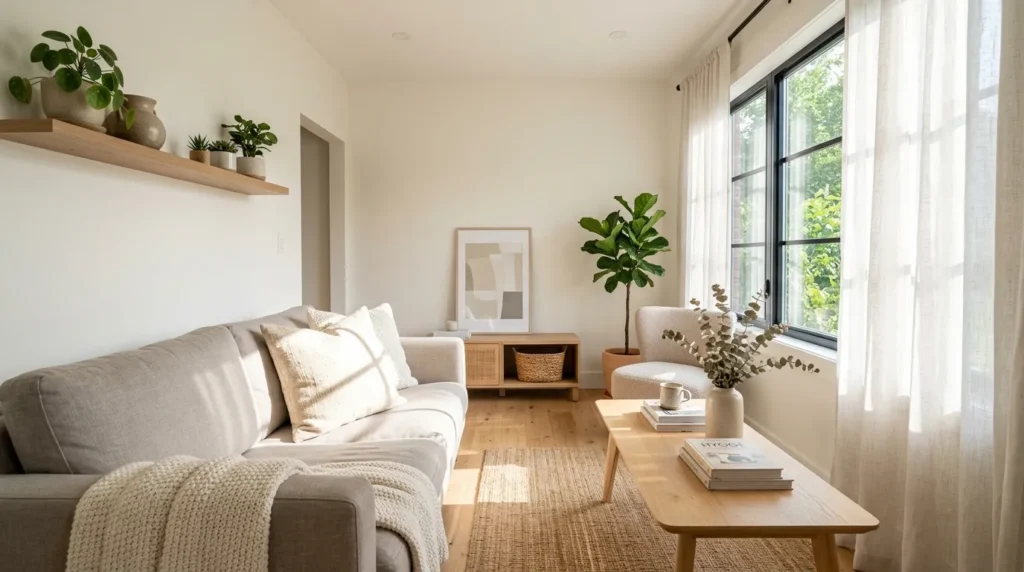
Color is one of the fastest ways to change how large a room feels. Light neutrals—warm white, soft greige, oatmeal, and pale taupe—bounce natural light around a room instead of absorbing it, which makes walls feel like they’re pushed further back than they actually are.
I’ve noticed that homeowners often reach for bold accent walls to add personality to a small space, but this usually has the opposite effect. Dark or saturated walls can make a small living room feel like it’s closing in, especially in rooms with limited natural light. A soft neutral base gives you a blank canvas that feels open first, with personality added through texture and accents rather than heavy color.
How To Style It
Choose a warm white or soft greige for walls, trim, and larger furniture pieces like sofas. Keep window treatments in a similar tone so they blend into the wall rather than visually cutting the room in half. Layer in texture through woven baskets, linen pillows, and natural wood tones to keep the palette from feeling flat or sterile. If you want contrast, save it for small accents like a black picture frame or a matte ceramic vase rather than large surfaces.
2. Multi-Functional Furniture
Quick Benefits
- Reduces the number of pieces needed
- Maximizes limited square footage
- Adds hidden storage
- Supports everyday flexibility
- Keeps rooms feeling open
Why It Works
A mistake many homeowners make in small living rooms is furnishing the space the same way they would a larger room—one piece, one purpose. In a compact space, every item should ideally serve more than one function.
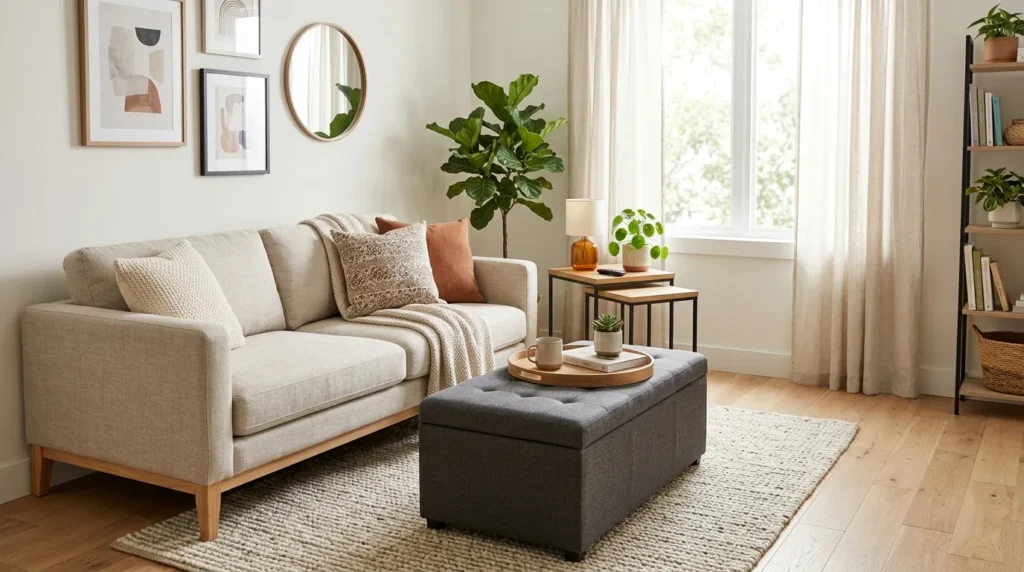
I’ve seen this idea transform spaces almost instantly. A coffee table with hidden storage replaces both a coffee table and a separate storage bin. An ottoman with a removable tray becomes extra seating, a footrest, and a side table all in one. This approach reduces visual clutter because you’re not adding separate pieces for separate needs—you’re consolidating.
How To Style It
Look for a storage ottoman that can double as seating when guests come over, and a nesting table set that expands only when needed. A daybed or sleeper sofa works well in living rooms that also need to function as an occasional guest room. Choose furniture with legs rather than solid bases where possible, since visible floor space beneath furniture makes the whole room read as more open.
3. Vertical Storage Walls
Quick Benefits
- Frees up floor space
- Increases storage capacity
- Draws the eye upward
- Makes ceilings feel taller
- Keeps clutter contained
Why It Works
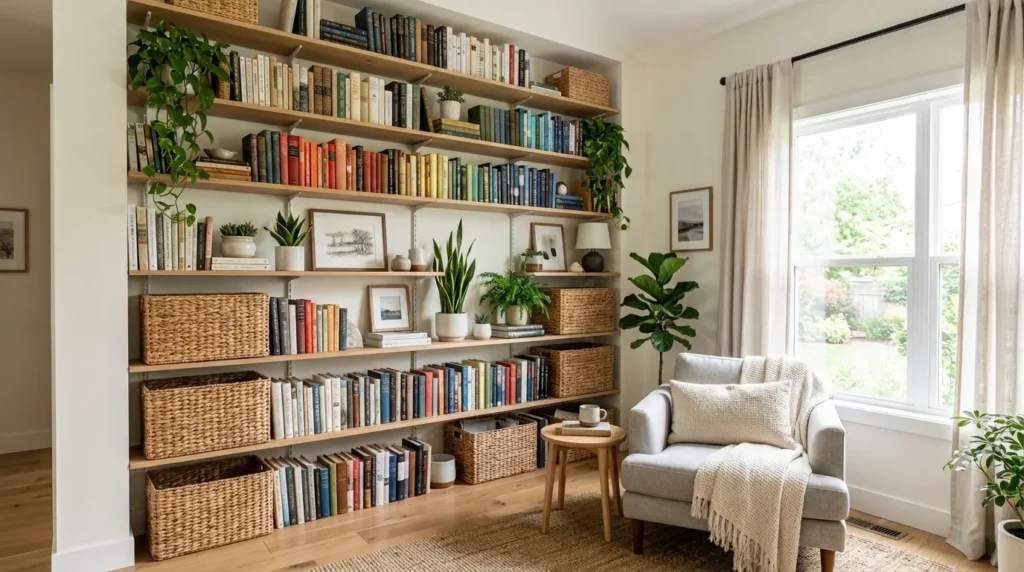
When floor space is limited, the walls become one of your most valuable design tools. Vertical storage—tall bookcases, floor-to-ceiling shelving, or built-in cabinetry—takes advantage of unused space above eye level while keeping the floor plan open.
That’s why many designers recommend going tall instead of wide when choosing storage furniture for small rooms. A narrow but tall bookcase holds just as much as a low, wide one, but it uses a fraction of the floor footprint. It also creates a natural vertical line that makes ceilings feel higher than they are.
How To Style It
Choose a slim bookcase or shelving unit that reaches close to the ceiling rather than a short, wide credenza. Paint the unit the same color as the wall behind it if you want it to visually disappear, or use a contrasting wood tone if you want it to become a design feature. Reserve the lower shelves for baskets that hide everyday clutter, and use the upper shelves for books, plants, and a few curated decorative objects.
4. Mirrors For Depth
Quick Benefits
- Reflects natural and artificial light
- Creates the illusion of more space
- Adds style without bulk
- Highlights architectural features
- Easy and affordable to add
Why It Works
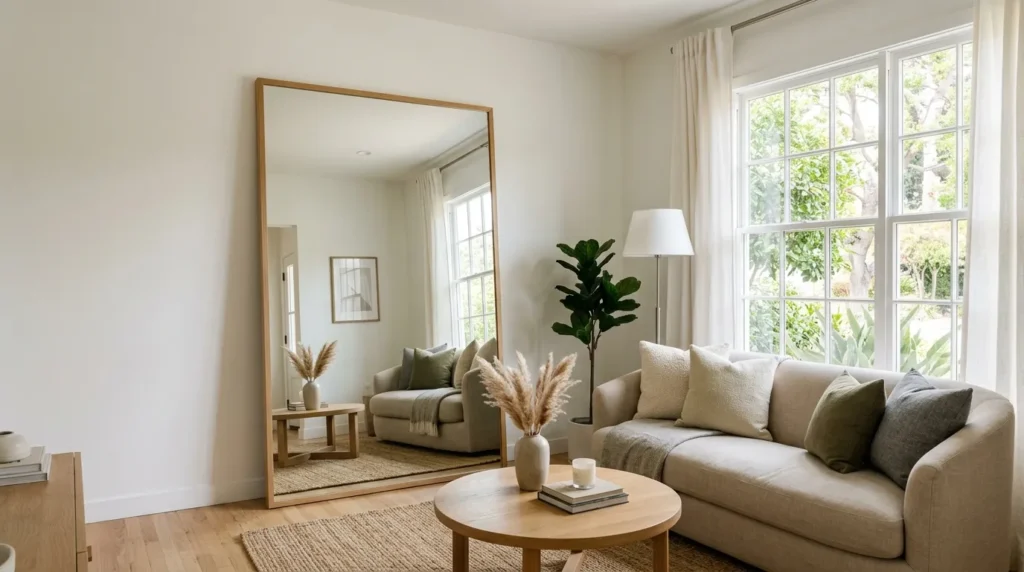
One simple trick I always suggest for small living rooms is adding a large mirror opposite the main window. Mirrors reflect both natural light and the view of the room itself, which visually doubles the sense of depth without adding any real furniture or floor space.
Beyond the practical light benefits, a well-placed mirror also acts as a piece of art. It fills wall space that might otherwise feel empty or require additional shelving, all while keeping the room feeling light and uncluttered.
How To Style It
Position a large, simple-framed mirror directly across from your main light source, whether that’s a window or a bright lamp. Leaning a floor mirror against the wall works especially well in small rooms because it adds height without requiring installation. If wall space is limited, a mirrored tray on a coffee table or console can create a similar light-bouncing effect on a smaller scale.
5. Slim Profile Sofas
Quick Benefits
- Opens up walking paths
- Improves room flow
- Reduces visual bulk
- Fits tighter layouts
- Still provides comfortable seating
Why It Works
The sofa is usually the largest piece of furniture in a living room, which makes it the most important decision when working with limited space. A deep, oversized sectional might look inviting in a showroom, but in a small room it often blocks natural walking paths and makes the space feel smaller than it is.
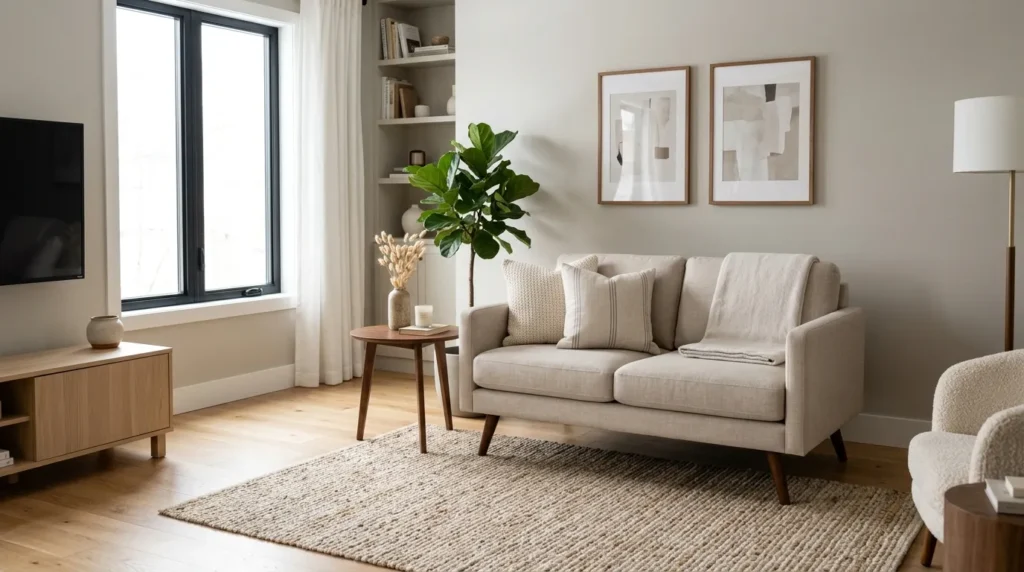
If you’re anything like me, you’ve probably been tempted by a big, plush sofa that looked perfect in photos but simply wouldn’t work in a smaller footprint. Slim profile sofas—those with narrower arms, lower backs, and tapered legs—provide the same comfort while taking up noticeably less visual and physical space.
How To Style It
Choose a sofa with track arms or slim rolled arms instead of oversized cushioned arms, and look for exposed wooden or metal legs rather than a skirted base. A loveseat or apartment-sized sofa (typically under 72 inches) usually fits small living rooms better than a standard three-seat sofa. Keep the fabric in a light, solid tone to prevent the sofa from visually dominating the room.
6. Declutter Open Surfaces
Quick Benefits
- Instantly reduces visual noise
- Improves everyday functionality
- Makes rooms feel calmer
- Easy to maintain
- Costs nothing to implement
Why It Works
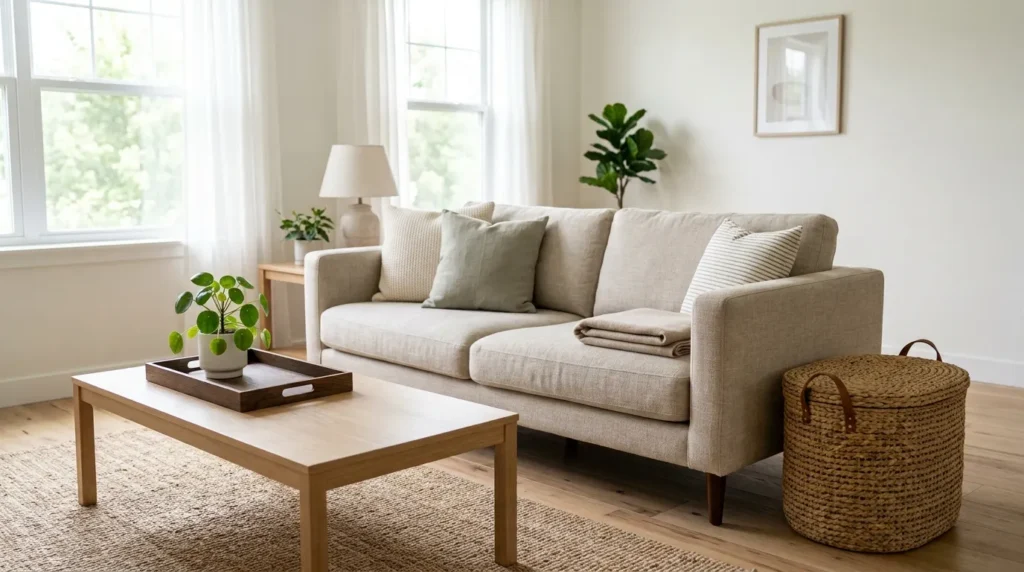
Clutter is one of the fastest ways to make even a well-designed small living room feel chaotic. Coffee tables covered in mail, remotes, and miscellaneous items pull focus away from the furniture and layout you’ve worked hard to plan.
I’ve noticed that clients who struggle with a “messy” feeling in their living room often don’t have a design problem—they have a storage problem. Once surfaces are cleared and everyday items have a dedicated home, the same furniture and layout suddenly feels intentional and modern.
How To Style It
Choose one or two decorative objects per surface, such as a small tray, a candle, or a single plant, rather than filling every inch of a coffee table. Add a lidded basket near the sofa for blankets, chargers, or mail that tends to accumulate. Build a quick nightly habit of resetting surfaces before bed so clutter never has a chance to build up.
7. Layered Soft Lighting
Quick Benefits
- Creates warmth and ambiance
- Reduces harsh shadows
- Highlights architectural details
- Makes evenings feel cozy
- Supports multiple activities
Why It Works
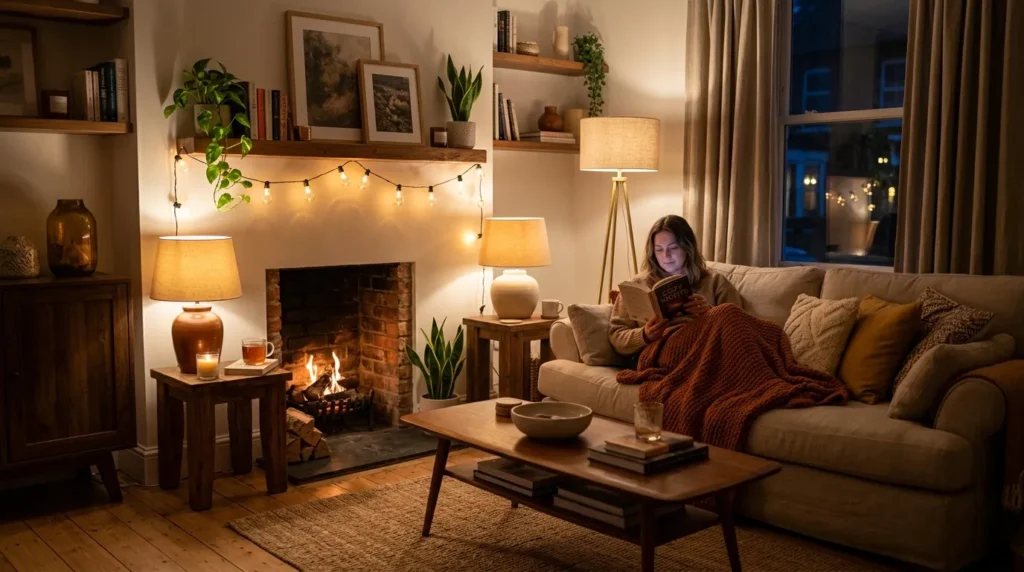
A single overhead light is one of the most common design mistakes in small living rooms. Harsh, centralized lighting flattens the room and makes every imperfection more visible, while layered lighting creates depth and warmth that a single fixture simply can’t achieve.
I’ve found that combining several smaller, softer light sources almost always looks more modern and intentional than relying on one bright overhead fixture, especially in the evening.
How To Style It
Combine a floor lamp in one corner, a table lamp near the seating area, and a few warm-toned LED candles or string lights for accent. Choose bulbs in a warm white tone (around 2700K) rather than bright white, which can feel clinical in a small space. Dimmer switches are an easy upgrade that allow the same lighting setup to shift from bright and functional during the day to soft and relaxed in the evening.
8. Textured Area Rugs
Quick Benefits
- Anchors furniture visually
- Adds warmth underfoot
- Defines the seating area
- Introduces texture without color
- Ties the room together
Why It Works
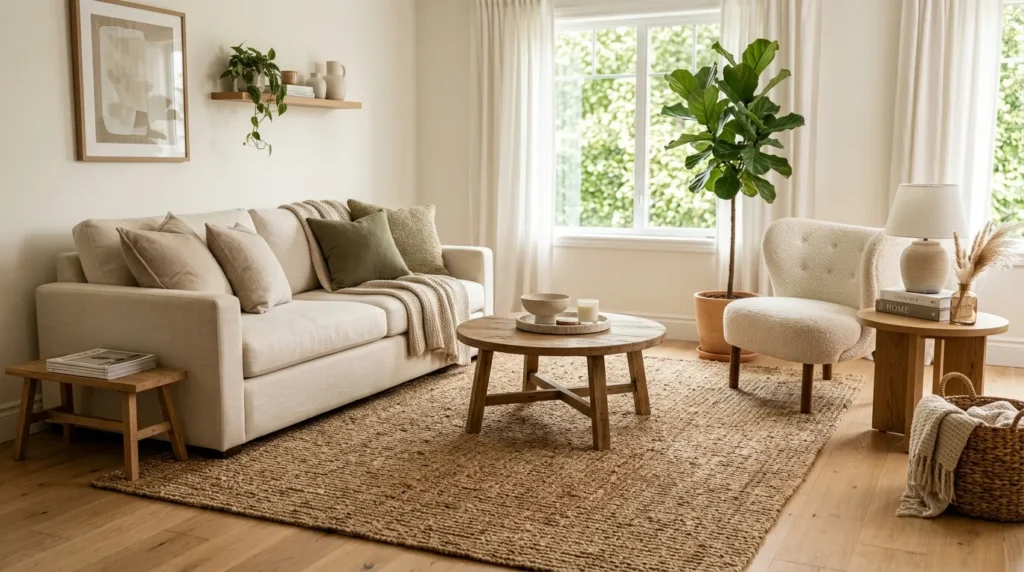
A mistake many homeowners make in small living rooms is choosing a rug that’s too small for the space. A tiny rug floating in the middle of the room actually makes the area feel more disjointed and smaller, while a properly sized rug visually anchors the furniture and makes the whole layout feel cohesive.
One thing that works especially well is choosing a textured, low-pile rug in a neutral tone. It adds warmth and interest without competing with the rest of the room’s color palette.
How To Style It
Choose a rug large enough that at least the front legs of your sofa and chairs sit on it, which visually unifies the seating area. A jute, wool, or looped-texture rug in a soft neutral adds depth without introducing bold pattern or color. Avoid rugs with busy prints in small rooms, since they can compete with other design elements and make the space feel more chaotic.
9. Floating Shelf Displays
Quick Benefits
- Adds storage without floor space
- Creates a curated, modern look
- Easy to update seasonally
- Highlights favorite decor pieces
- Works in awkward wall spaces
Why It Works
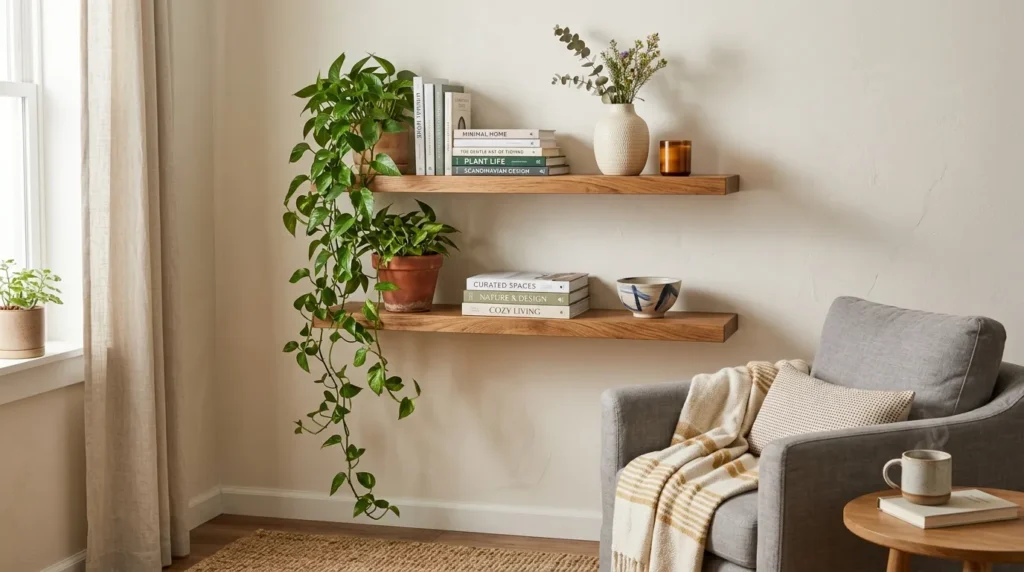
Floating shelves solve one of the biggest challenges in small living rooms: where to display books, plants, and decorative objects without adding bulky furniture. Because they mount directly to the wall, they create storage and display space while keeping the floor completely open.
I’ve seen this idea transform spaces especially well in narrow rooms or awkward corners where a traditional bookcase simply wouldn’t fit. A few well-placed floating shelves can do the same visual job as a large piece of furniture, minus the footprint.
How To Style It
Install two or three floating shelves at varying heights, leaving breathing room between each one rather than stacking them too closely together. Style each shelf with a mix of a few books, one plant, and a single decorative object rather than crowding every shelf edge to edge. Keep the shelf color consistent with the wall for a seamless look, or choose a warm wood tone if you want the shelves to double as a design feature.
10. Cohesive Color Accents
Quick Benefits
- Adds personality without clutter
- Keeps small rooms feeling calm
- Creates visual consistency
- Easy to update seasonally
- Ties decor pieces together
Why It Works
Small rooms can handle personality and color—but only when it’s intentional. A mistake many homeowners make is introducing too many different accent colors at once, which makes a small space feel busy rather than curated.
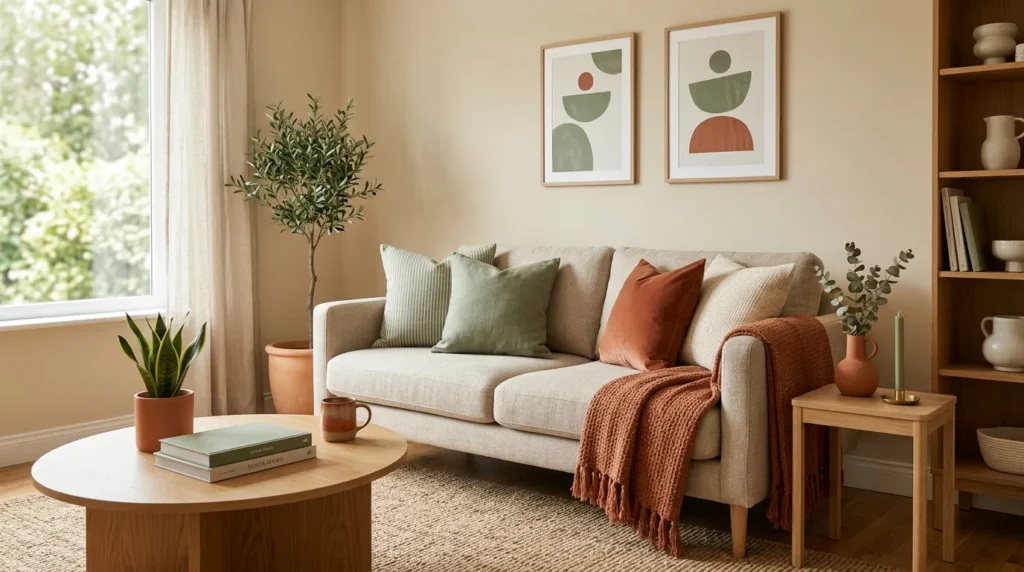
That’s why many designers recommend choosing two, maybe three, accent colors and repeating them consistently throughout the room. This creates a sense of cohesion that reads as modern and thoughtfully designed, even in a very small footprint.
How To Style It
Pick one or two accent colors, such as sage green and terracotta, or navy and brass, and repeat them through pillows, a throw blanket, a vase, and a small piece of art. Avoid introducing a new color with every new decor purchase, and instead ask whether it fits within your existing palette. This approach makes it easy to update the room seasonally just by swapping one or two accent pieces rather than redecorating the entire space.
Frequently Asked Questions
What colors make a small living room look bigger? Light neutrals like warm white, soft greige, and pale taupe reflect natural light and make walls feel like they recede, creating the illusion of a larger space. Cool undertones can feel sterile, so warm neutrals are usually the safer choice.
Should I avoid dark furniture in a small living room? Not necessarily. Dark furniture can work well if it has a slim profile and visible legs, since this keeps the piece from feeling heavy. The key is balancing dark furniture with a light wall color and plenty of negative space.
What size rug works best in a small living room? Choose a rug large enough for at least the front legs of your sofa and chairs to sit on. A rug that’s too small will make the room feel more fragmented rather than more spacious.
How can I add storage to a small living room without clutter? Vertical storage, multi-functional furniture like storage ottomans, and floating shelves all add storage capacity without taking up valuable floor space or making the room feel crowded.
Is it better to have less furniture in a small living room? Generally, yes. Fewer, well-chosen pieces that serve multiple purposes almost always create a cleaner, more modern look than filling the room with several smaller, single-purpose items.
How do I make a small living room feel cozy instead of empty? Layered lighting, a textured rug, and a few intentional accent colors add warmth without adding clutter. Cozy doesn’t require more furniture—it requires more thoughtful texture and lighting.
Conclusion
A small living room doesn’t have to feel like a compromise. With the right approach to color, furniture scale, storage, and lighting, even the most compact space can feel open, modern, and genuinely comfortable to live in every day.
The key takeaway is that clean, modern design in a small space comes down to intention. Every piece of furniture, every accent color, and every light source should be doing real work in the room—whether that’s providing storage, reflecting light, or anchoring the layout. When you remove anything that isn’t earning its place, the room naturally starts to feel calmer and larger.
Start with one or two ideas from this list—maybe swapping in a slim sofa or adding a large mirror—and build from there. Small, intentional changes add up to a living room that feels both stylish and functional, no matter how many square feet you’re working with.
Related Articles
- Cozy Bedroom Ideas for Small Spaces
- Small Apartment Layout Solutions
- Modern Farmhouse Living Room Decor
- Neutral Home Styling Tips
- DIY Accent Wall Ideas