Adding Stair Runner Carpeting: How Wide Should the Runner Be on 36″ Stairs?
Introduction
The ideal stair runner width for 36 inch stairs is typically 30 inches, which leaves a recommended 3 inch margin of wood on both sides. Choosing the correct stair runner width for 36 inch stairs balances aesthetic appeal with safety, ensuring your staircase remains functional and visually proportioned.
This guide covers how to select the right runner size for your home. You will learn about standard runner dimensions, the importance of maintaining consistent margins, and how these measurements affect both the look and safety of your staircase. We also discuss essential considerations for measuring stairs for carpet runner installation to help you achieve a professional finish. By following these industry-standard practices, you can ensure your project meets common design expectations while keeping your treads clear for safe navigation.
Determining Runner Widths
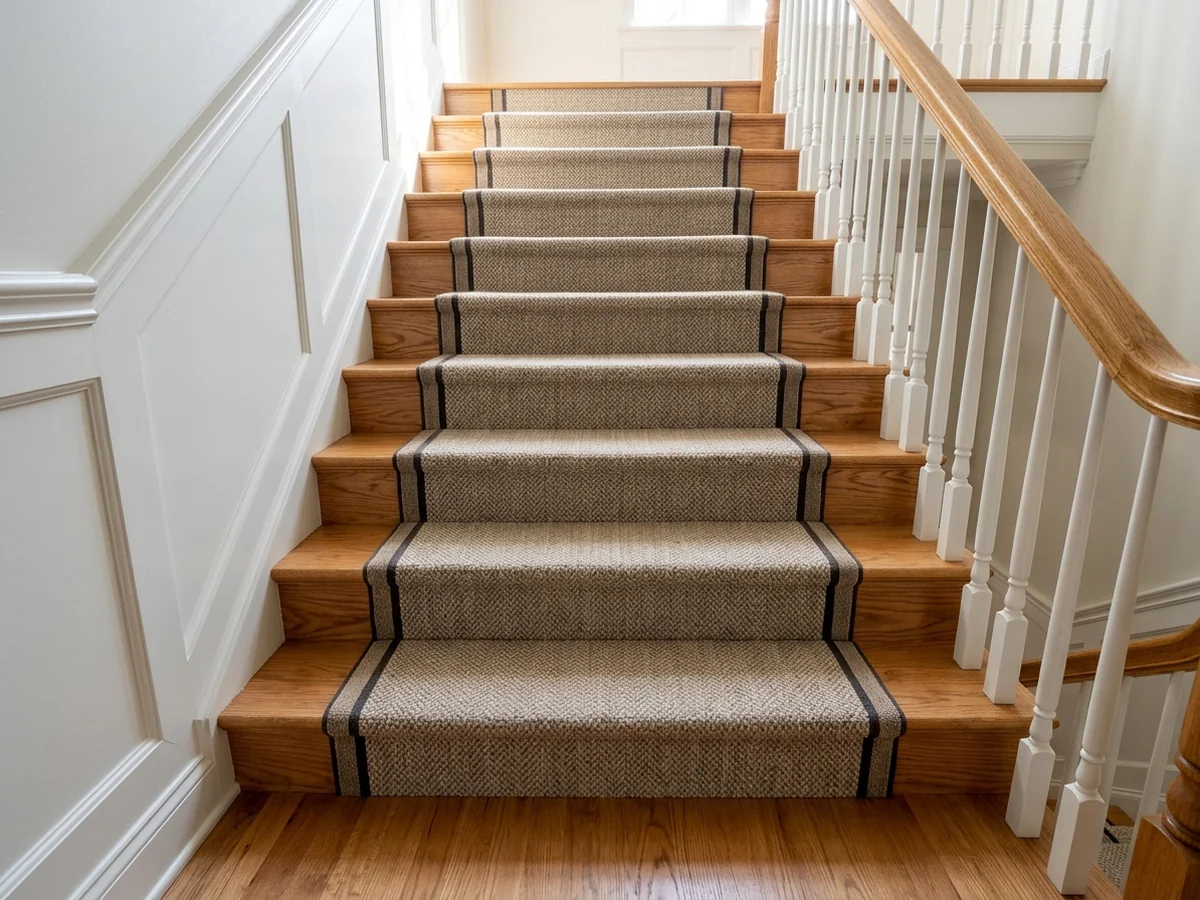
Selecting the appropriate carpet runner width for 36 inch stairs requires balancing aesthetic proportions with functional safety. For a standard 36-inch wide staircase, a 30-inch runner is a common choice, as this configuration typically leaves 3 inches of exposed wood on either side. Maintaining these margins creates a balanced visual frame that highlights the stair tread dimensions while preventing the runner from appearing crowded or overwhelming the staircase architecture.
A common design rule suggests leaving 3 to 4 inches of bare wood visible on either side of the carpet. If a runner is too wide, it may make the staircase look cluttered, while one that is too narrow can create a potential tripping hazard by failing to provide adequate coverage for stable foot placement.
Safety and Structural Considerations
Before finalizing your dimensions, it is essential to consider the structural requirements of your staircase. Typical practice suggests that stairways maintain a minimum clear width of 36 inches above handrail height. Furthermore, according to the International Residential Code, all stair treads must have a minimum depth of 10 inches. Ensuring your stairs meet these specifications provides a secure foundation for any decorative runner.
Calculating Dimensions and Materials
Successful installation relies on precise measurements and the selection of appropriate materials. While standard runner widths are typically 27 inches or 30 inches, your choice allows flexibility based on your desired reveal. To calculate the total length needed for your project, a common rule is to multiply the sum of the tread depth and riser height by the total number of steps. Always account for extra material to accommodate the turn at the nose of each step.
The following table outlines common width configurations for a standard 36-inch staircase:
| Runner Width | Total Margin (Combined) | Individual Side Reveal |
|---|---|---|
| 27 inches | 9 inches | 4.5 inches |
| 30 inches | 6 inches | 3 inches |
Best Practices for Installation
The finish of your installation often depends on the quality of the underlying components. Using firm, thin carpet padding is standard practice to maintain a clean edge and prevent the runner from shifting during regular use. Ideally, this padding should be between 1/4 inch and 3/8 inch thick.
Whether you choose a waterfall installation method, where the carpet wraps over the nose of the tread, or an upholstered installation method, where it is tucked tightly against the riser, consistent margins are key. Before purchasing, verify your stair measurements, as minor variations in construction can affect the final look. Ensuring these margins remain uniform along the entire run of the staircase creates a professional, intentional aesthetic that complements the surrounding home decor.
Calculating Ideal Runner Margins

To achieve a professional look on a staircase, a common design rule is to leave 3 to 4 inches of bare wood visible on either side of the carpet. This margin frames the runner and highlights the craftsmanship of the wooden stairs beneath.
When working with a standard staircase, a 30-inch carpet runner width for 36 inch stairs is typically chosen to maintain this balance. By placing a 30-inch runner centered on the tread, you naturally create a 3-inch reveal of wood on the left and right sides. This specific proportion is widely favored because it avoids the cluttered appearance of an oversized runner while ensuring the carpet covers the primary path of foot traffic.
Following these guidelines helps ensure the finished result feels intentional rather than haphazard. If a runner is significantly wider, it may hide too much of the staircase structure, while a runner that is too narrow can look undersized and potentially create a tripping hazard. Consistency in your measurements is the key to achieving the desired aesthetic.
Staircases are rarely perfectly symmetrical, so it is essential to account for variations before cutting your material. If your walls are not parallel or the stair width fluctuates, always measure at the narrowest point of the staircase. Using the tightest measurement ensures that your runner will fit through the entire run without bunching or requiring awkward trimming at the edges.
- Measure the width of the tread at the narrowest point to determine the maximum runner size.
- Subtract 6 to 8 inches from that narrowest measurement to account for the desired wood reveal on both sides.
- Ensure your final carpet choice aligns with common standard runner widths, which are typically 27 or 30 inches, to simplify the installation process.
Keep in mind that the International Residential Code requires a minimum tread depth of 10 inches for stairs, which remains a constant regardless of the runner width you select. Focusing on these dimensions helps you maintain a safe and visually appealing transition between floors.
Tread Coverage for 36-Inch Stairs
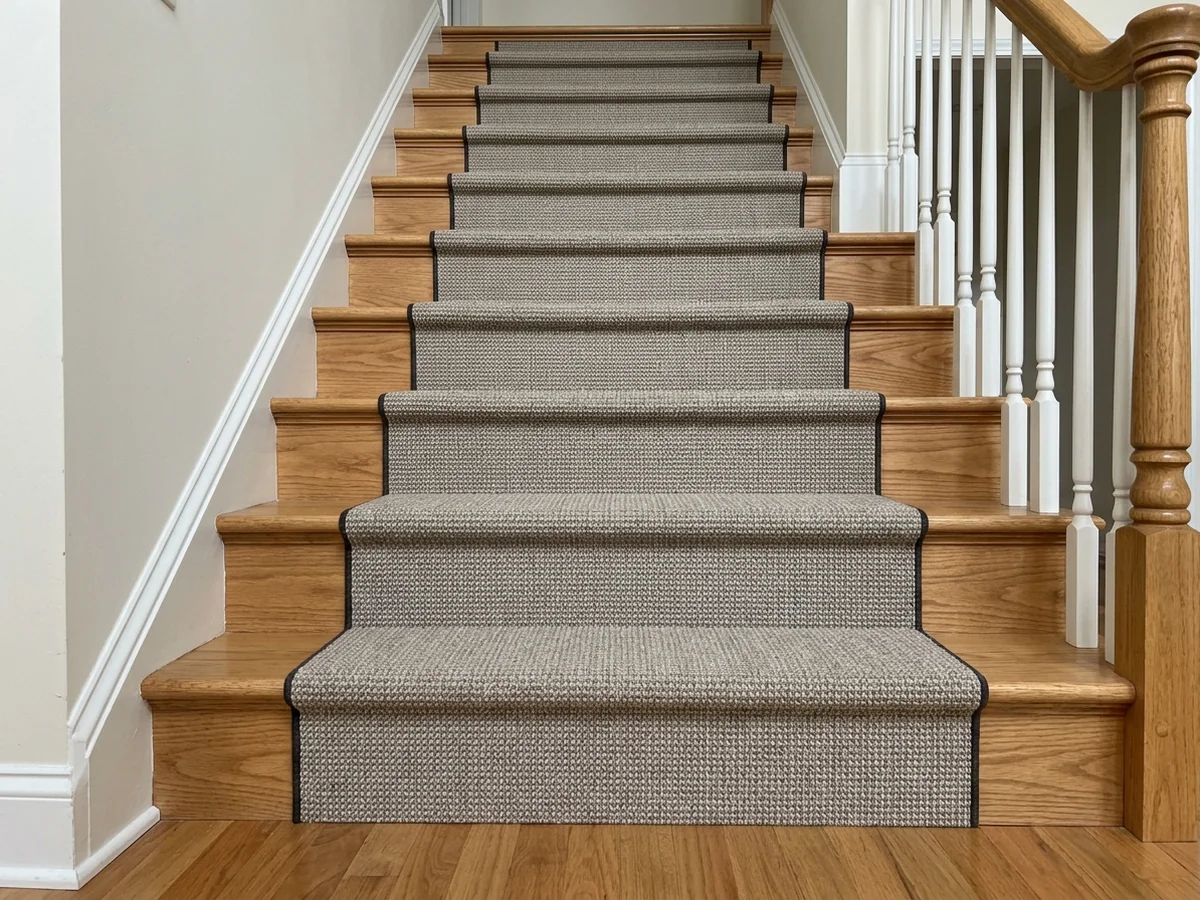
For a standard 36-inch wide staircase, a 30-inch runner is common practice, as it leaves 3 inches of exposed wood on each side. This margin balances aesthetic appeal with the need to maintain enough surface area for safe footing.
When planning your layout, keep the International Residential Code in mind, which requires a minimum tread depth of 10 inches. This measurement refers to the horizontal distance from the front of one stair to the front of the next. While a runner adds a layer of comfort and style, it does not change the structural footprint of the stair tread dimensions themselves.
Adding carpet and padding changes how the stair feels underfoot and can impact the effective depth of the tread. Because padding and carpet thickness extend slightly past the riser, they can reduce the available area for your foot if the installation is not handled carefully. This is particularly important when considering the toe kick, which is the space beneath the overhang of the tread.
Safety is a significant factor when dealing with carpet thickness and overhangs. If the carpet is too thick or the installation creates a bulky roll at the edge of the tread, it may protrude further than intended. This creates a potential tripping hazard, especially if the carpet creates an uneven surface that obscures the edge of the step.
To ensure a safe and professional finish, consider the following points regarding your carpet installation:
- Ensure the padding is firm and thin, typically 1/4 inch to 3/8 inch thick, to prevent a squishy or unstable feel.
- Check that the chosen carpet pile does not create an excessive lip at the nosing of the stair.
- Verify that your runner installation method, whether waterfall or upholstered, maintains a taut fit against the riser to avoid creating loose, snag-prone material.
Always prioritize a secure fit over excessive decorative width. A runner that is too wide often creates a cluttered look, while one that is too narrow might not provide adequate coverage for high-traffic areas. By maintaining consistent margins on both sides, you keep the staircase looking balanced while ensuring the carpet remains firmly anchored to the center of each tread.
Measuring for Proper Runner Width

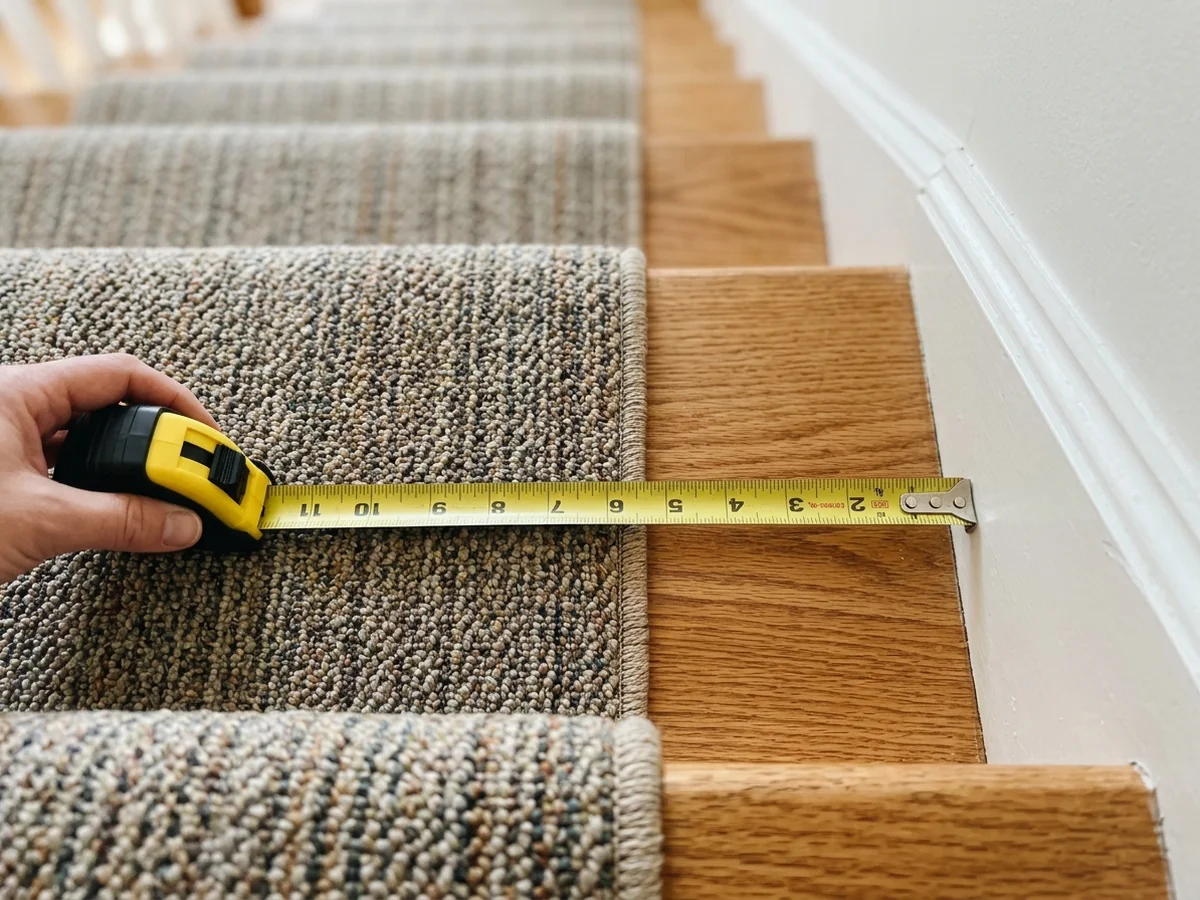
Determining the correct carpet runner width for 36 inch stairs requires balancing visual appeal with safety. A common design rule suggests leaving 3 to 4 inches of bare wood visible on either side of the runner, which creates a clean, architectural look. For a standard staircase width of 36 inches, this typically results in a 30-inch wide runner. Choosing a width that is too narrow can create a potential tripping hazard, while an excessively wide runner may make the staircase appear cluttered and hide the craftsmanship of the treads.
Understanding Standard Dimensions
Before purchasing materials, it is helpful to understand the baseline requirements for residential stairs. The International Residential Code requires a minimum tread depth of 10 inches, and industry guidance notes that stairways should ideally maintain a minimum clear width of 36 inches above the handrail. Standard runner widths are typically manufactured in 27-inch or 30-inch options. If your staircase is exactly 36 inches wide, a 30-inch runner is a frequent choice as it adheres to the 3-inch margin preference.
Step-by-Step Measurement Guide
Accurate measurement is the foundation of a successful installation. Follow this process when measuring stairs for a carpet runner:
- Measure the total wall-to-wall width of your staircase to confirm the available space.
- Identify your preferred margin, typically 3 to 4 inches per side, and subtract this from your total width to select the standard stair runner width that fits best.
- Measure the depth of each tread from the back of the tread to the edge of the nose.
- Measure the vertical height of each riser.
- Calculate the total length needed by adding the tread depth to the riser height, then multiplying that sum by the total number of steps.
- Factor in extra material for wrapping around the nose of the tread and for waste during the cutting process.
Key Considerations for Installation
When calculating your total material requirements, you must account for the nose of the stair. The runner must wrap tightly over this edge, and failing to include the nose depth in your measurements will result in insufficient material. Additionally, consider the type of carpet padding used, as it should be firm and thin, typically 1/4 inch to 3/8 inch thick, to ensure a stable surface. Most residential projects utilize a waterfall or upholstered installation method. Always verify the specific width and depth of your individual steps before finalizing your order, especially if your stairs feature decorative trim or uneven wall spacing, as these elements can affect the final fit.
| Measurement Factor | Common Guideline |
|---|---|
| Ideal Wood Reveal | 3 to 4 inches per side |
| Standard Runner Width | 27 or 30 inches |
| Minimum Tread Depth | 10 inches per IRC |
| Padding Thickness | 1/4 to 3/8 inch |
Padding Considerations for Narrow Stairs
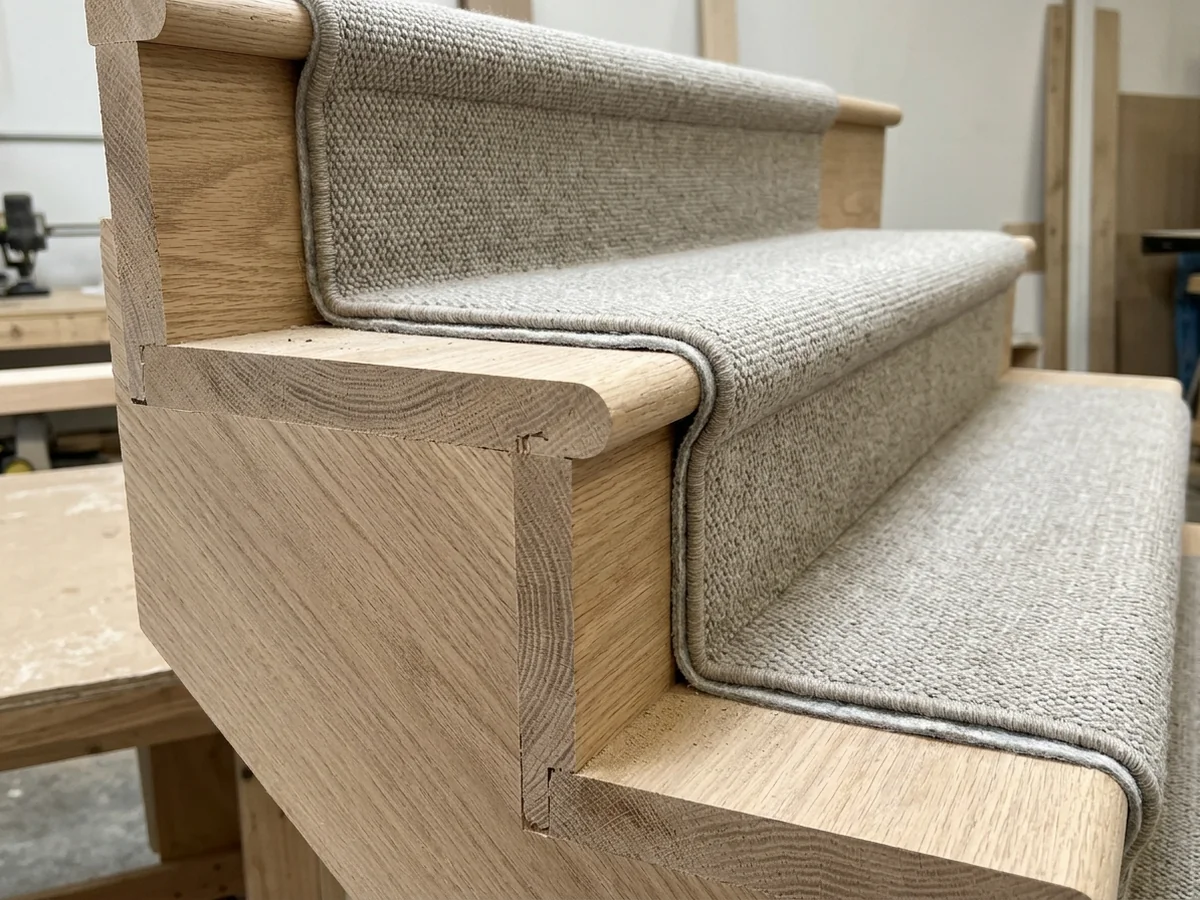
When you are measuring stairs for a carpet runner, the choice of padding is just as critical as the runner itself. For optimal safety and durability, standard practice suggests using firm, thin carpet padding. Padding for this application should typically measure between 1/4 inch and 3/8 inch in thickness. Using a thinner, high-density pad is essential because it prevents the carpet from shifting underfoot.
A pad that is too thick or soft can create a spongy feel, which increases the risk of tripping as you navigate the stairs. Firm padding also helps the runner maintain a crisp edge over the nosing of each tread.
Balancing Padding and Tread Safety
The International Residential Code requires a minimum tread depth of 10 inches. Adding thick padding can inadvertently change the way your foot interacts with these dimensions, potentially reducing the effective landing area if the pad is installed improperly. Maintaining a firm, thin profile ensures you remain compliant with the intended tread depth while keeping the runner secure.
When working with a standard stair runner width, ensure the padding is cut slightly narrower than the carpet itself to prevent it from showing at the edges.
Installation Methods and Profiles
Your chosen installation method affects the final look and feel of the padding. Most residential stair runners are installed using one of two primary techniques:
- The waterfall installation method involves the carpet running straight from the nose of the tread to the next tread, leaving the space under the nosing empty. This provides a softer appearance and is generally easier for DIY projects.
- The upholstered installation method wraps the carpet tightly under the nosing and against the riser. This creates a tailored, clean profile that requires more precise cutting and padding placement.
Professional Considerations for Complex Stairs
Complex staircase configurations, such as those with winding or curved steps, often require professional installation. Experienced installers have the specialized tools necessary to ensure that the padding is perfectly tensioned across every angle. They can manage the specific challenges of matching patterns across turns, which is difficult to achieve without professional training.
If your home features non-standard angles or custom treads, reaching out to a professional helps you avoid common pitfalls like uneven wear or hazardous buckling. Even on a standard 36-inch wide staircase, achieving consistent tension requires careful attention to the stair stringer and the transition between the tread and riser. When planning your project, remember that a runner that is too wide can make a staircase look cluttered, while one too narrow may be a tripping hazard.
Safety Risks of Incorrect Widths

Choosing the wrong dimensions for your carpet runner creates significant safety hazards and aesthetic imbalances. A runner that is too narrow increases the risk of slipping by leaving too much of the stair tread exposed, while an overly wide runner can overwhelm the visual space of the staircase. Achieving the correct dimensions when you have a 36-inch wide staircase is a balance between safety, design, and structural requirements.
The Role of Margins and Proportions
Common design practice suggests leaving 3 to 4 inches of bare wood visible on either side of the runner. For a standard 36-inch wide staircase, this guidance typically results in a 30-inch wide runner, which leaves a 3-inch margin on each side. When a runner extends too close to the stringers, the staircase can appear cluttered and disproportionate. Conversely, a runner that is too narrow fails to provide consistent traction across the center of the tread, where foot traffic is heaviest. Properly measuring stairs for a carpet runner ensures you cover the center of the tread while maintaining enough clearance to prevent tripping on the edges of the carpet.
Technical Requirements and Installation
It is important to understand that a runner is a decorative strip that leaves the sides of the steps exposed, unlike wall-to-wall carpeting which covers the entire surface and is tucked against the baseboard. Because these edges are visible, they must be finished with binding, serging, or fringe to prevent fraying. Furthermore, the International Residential Code (IRC) requires a minimum tread depth of 10 inches for stairs. Your installation must account for this depth to ensure the runner follows the contour of each step without sliding, bunching, or creating a snagging hazard.
Quick Reference for Standard Staircases
To assist in your planning, the following table outlines common measurements for residential staircases based on standard industry practices.
| Measurement Component | Common Guidance |
|---|---|
| Standard Staircase Width | Minimum 36 inches |
| Typical Runner Width | 27 inches or 30 inches |
| Recommended Side Margin | 3 to 4 inches |
| Padding Thickness | 1/4 inch to 3/8 inch |
When calculating your total materials, remember that the stair runner length is determined by multiplying the sum of the tread depth and riser height by the number of steps. Most residential installations follow either a waterfall or upholstered installation method. Regardless of the style chosen, ensure your padding is firm and thin to maintain stability underfoot, as overly plush padding can cause the runner to shift and create an uneven surface.
Width Adjustments for Winder Stairs
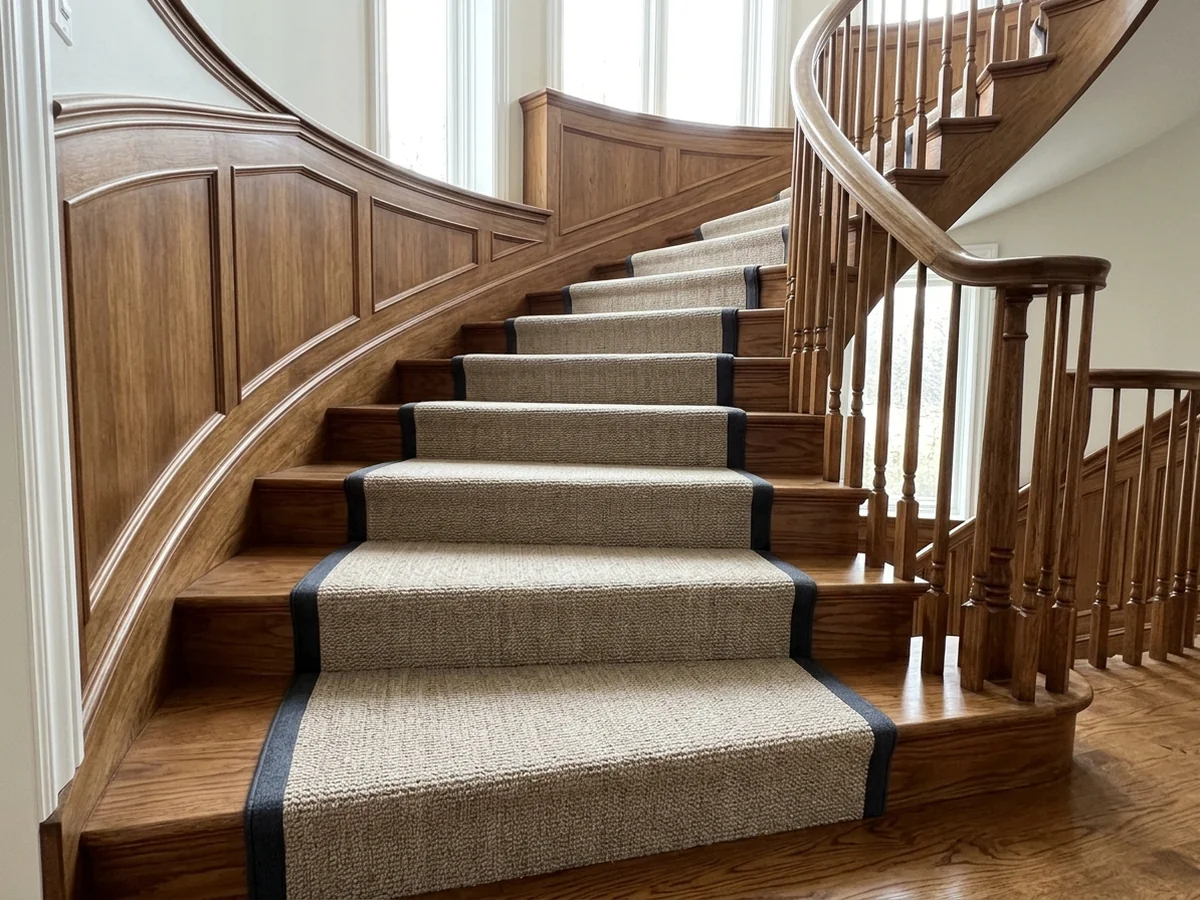
Adjusting the runner dimensions on winder or curved stairs requires careful planning because the treads are wider at the outer edge than the inner edge. While a straight staircase allows for a uniform margin, winders often demand custom templates to ensure the carpet remains centered and aesthetically balanced as it follows the turn.
When dealing with these geometric variations, standard measurement techniques often fall short. You must account for the changing width of the stair tread as it radiates from the inner stringer to the outer stringer. If you use a single width measurement based on the narrowest point, the runner may look disproportionately small on the wider sections. Conversely, sizing for the widest point can create an awkward fit near the center post.
Professional measurement or physical templating is highly recommended for these complex configurations. By creating a template with heavy paper or cardboard, you can visualize how the runner will sit across each irregular step. This process helps you identify exactly how much bare wood will be visible, allowing you to make intentional design choices about your margins.
Maintaining consistent margins on treads that vary in width is a common design challenge. Experts often suggest the following approaches to manage these transitions:
- Use a flexible template to trace the exact shape of each individual tread to identify the center point for the runner.
- Prioritize a uniform center alignment, which often looks more intentional than trying to keep the side margins perfectly parallel to both walls.
- Consider slightly tapering the runner if the staircase geometry is extreme, though this requires specialized fabrication.
- Ensure the carpet padding remains centered under the runner to provide consistent support, as uneven padding can cause the carpet to shift or ripple during use.
Because these stairs do not offer a straight path, the visual impact of the installation is heightened. A runner that is centered correctly will distract the eye from the irregular shape of the steps, whereas an off-center placement will emphasize the lack of symmetry. Always verify the International Residential Code requirement for a minimum tread depth of 10 inches at the narrowest point of the winder, as this impacts both the safety and the total surface area available for your carpet installation.
FAQ
How wide should a carpet runner be for 36 inch stairs?
For a 36-inch wide staircase, it is common practice to use a 30-inch wide runner. This measurement typically leaves a 3-inch margin of bare wood visible on either side, providing a balanced aesthetic.
Is a 36-inch wide staircase wide enough for a runner?
Yes, 36 inches is a common width for residential staircases and works well for a runner installation. Common guidance suggests that stairways maintain a minimum clear width of 36 inches above the handrail height to ensure safe passage.
How do I calculate the total length needed for a stair runner?
To determine the total length, it is common practice to calculate the sum of the tread depth and riser height, then multiply that figure by the number of steps. It is also important to account for any extra length needed to wrap around the nosing of each tread.
Does the runner width affect stair safety?
Selecting the correct width is important because a runner that is too wide can make a staircase look cluttered, while one that is too narrow may become a tripping hazard. Aiming for a consistent reveal of bare wood helps define the edges of each step for users.
What type of carpet padding is best for stairs?
Common guidance indicates that carpet padding for stairs should be both firm and thin, typically measuring between 1/4 inch and 3/8 inch in thickness. Using the correct padding ensures the runner stays secure and does not shift underfoot during use.
What are the legal requirements for stair tread depth?
The International Residential Code requires a minimum tread depth of 10 inches for stairs. Meeting this standard ensures that each step provides enough surface area for safe foot placement when navigating the staircase.
Conclusion
Determining the correct stair runner width for 36 inch stairs requires balancing aesthetic preferences with practical safety margins. Aiming for 3 inches of exposed wood on each side typically results in a 30-inch runner, which provides a visually balanced look while keeping the edges away from high-traffic areas. Before finalizing your purchase, double check your measurements at the narrowest point of your staircase to ensure a consistent reveal throughout the entire flight. Once you have confirmed your dimensions and selected your desired style, your next step is to calculate the total length needed by accounting for both the tread depth and riser height of every step.
Sources: jerseycounty-il.gov
You might also like: What Is the Standard Code Height for a Stair Handrail from Tread Nose?