
Heavy-Duty Modern Square Matte Black Handrail Brackets: Weight Limits
Introduction
Most standard matte black handrail brackets weight limit requirements for residential and commercial stairways are governed by established safety codes. Both the International Building Code and the Occupational Safety and Health Administration require handrails to withstand a concentrated load of at least 200 pounds.
This article examines the technical specifications necessary to ensure your installation meets safety standards. You will learn about the typical material strengths of various metal alloys, how powder coating contributes to finish longevity, and the regulatory frameworks that dictate necessary force resistance. We provide clear guidance on evaluating structural integrity to help you choose the right hardware for your specific handrail project.
Matte Black Bracket Weight Limits

Every handrail support system must be capable of resisting a concentrated load of at least 200 pounds to meet safety standards. This requirement ensures that the hardware can withstand the force exerted by an individual leaning on or grasping the rail for support.
The International Building Code (IBC) explicitly requires handrails to withstand this concentrated load of 200 pounds. Similarly, the Occupational Safety and Health Administration (OSHA) mandates that handrails must support a force of at least 200 pounds applied in any downward or outward direction. These regulations serve as the baseline for structural performance in both residential and commercial environments.
Achieving this capacity depends on the material properties of the hardware and the integrity of the mounting surface. While aesthetic choices often drive the selection of a matte black finish, the underlying metal composition dictates the true load-bearing potential of the component. Common guidance suggests that stainless steel brackets typically offer higher tensile strength compared to zinc alloy or cast iron alternatives.
The durability of the finish also plays a role in long-term structural reliability. Powder coating is widely considered to provide a more durable and resilient finish for matte black hardware than standard liquid spray paint. A robust finish helps protect the metal from environmental degradation, which could otherwise weaken the bracket over time.
Compliance hinges on ensuring that the entire installation, including the brackets and the chosen fasteners, can handle the mandated force. When assessing the suitability of square matte black handrail support hardware, focus on whether the manufacturer provides certification that their products meet these established load requirements. Always prioritize hardware that specifies compliance with these national safety codes to ensure the system functions as intended under stress.
Understanding Handrail Load Requirements

Building codes establish clear performance standards for handrail systems to ensure user safety in residential and commercial settings. Whether you are installing square matte black handrail supports or classic round designs, the primary objective is to maintain structural integrity under load. Compliance requires that handrail brackets and their attachments are capable of resisting significant force, providing a reliable grip for anyone navigating a staircase or ramp.
Regulatory Compliance Standards
The International Building Code (IBC) mandates that handrail systems must be able to withstand a concentrated load of at least 200 pounds. This requirement ensures that the assembly remains stable during regular use or in emergency situations. Similarly, Occupational Safety and Health Administration (OSHA) regulations require handrails to withstand a force of at least 200 pounds applied in any downward or outward direction. These standards serve as the baseline for evaluating the safety of any installation, regardless of the bracket finish or aesthetic style.
Material Considerations for Structural Integrity
While matte black finishes are a popular design choice, the underlying material of the hardware determines its mechanical performance. Stainless steel handrail brackets typically offer higher tensile strength compared to zinc alloy or cast iron alternatives, making them a common choice for high-traffic areas where durability is paramount. When selecting hardware, prioritize components that are engineered to meet the 200-pound load threshold. If you choose matte black hardware, look for options that utilize powder coating, as this finish generally provides better durability and resistance to wear than standard liquid spray paint.
| Material Type | Relative Tensile Strength | Common Use Case |
|---|---|---|
| Stainless Steel | High | Commercial and exterior |
| Zinc Alloy | Moderate | Light-duty residential |
| Cast Iron | Variable | Decorative interior |
Achieving a compliant installation involves more than just selecting high-quality hardware. It requires ensuring that the entire system, from the mounting surface to the handrail bracket load capacity, works in unison. Always verify that your chosen products are rated to meet these safety expectations, as the hardware must perform consistently under pressure to satisfy local building codes and safety inspections.
Material Strength and Load Capacity

The structural performance of hardware depends on the intrinsic tensile strength of the base metal, which determines how well a unit resists deformation under pressure. When evaluating the matte black handrail brackets weight limit for a project, the focus must remain on meeting established safety benchmarks. The International Building Code (IBC) requires handrails to be able to withstand a concentrated load of 200 pounds. Similarly, the Occupational Safety and Health Administration (OSHA) requires handrails to withstand a force of at least 200 pounds applied in any downward or outward direction. These standards apply regardless of the aesthetic finish of the bracket.
Material Selection and Structural Integrity
Material choice serves as the foundation for overall handrail bracket load capacity. It is common guidance that stainless steel hardware typically offers higher tensile strength compared to zinc alloy or cast iron alternatives, making it a frequent choice for high-traffic environments. While zinc and cast iron may suffice for lighter residential applications, stainless steel remains a preferred option for its structural resilience.
Furthermore, matte black hardware finished with powder coating generally provides a more durable protective layer than standard liquid spray paint, which helps maintain the aesthetic and integrity of the bracket surface over time.
| Material | General Strength Profile | Finish Durability |
|---|---|---|
| Stainless Steel | High tensile strength | Excellent |
| Zinc Alloy | Moderate tensile strength | Variable |
| Cast Iron | High rigidity | Requires maintenance |
Engineering a Reliable Installation
When designing a system, the interaction between the bracket material and the mounting surface dictates the success of the installation. Choosing a robust metal ensures that the support remains rigid under the 200 pound load requirement mandated by regulatory bodies. While the bracket itself must be strong, the total weight capacity is also influenced by the quality of the connection to the wall and the structural integrity of the mounting point.
Users should note that the strength of a complete system depends on the entire assembly, including the fasteners and the structural backing behind the wall surface. Selecting high-strength alloys allows for a more reliable installation that meets safety standards for both residential and commercial environments. Proper planning involves verifying that the mounting hardware is compatible with the wall substrate to ensure the system can safely support the required load without failure.
Finishing and Weight Capacity
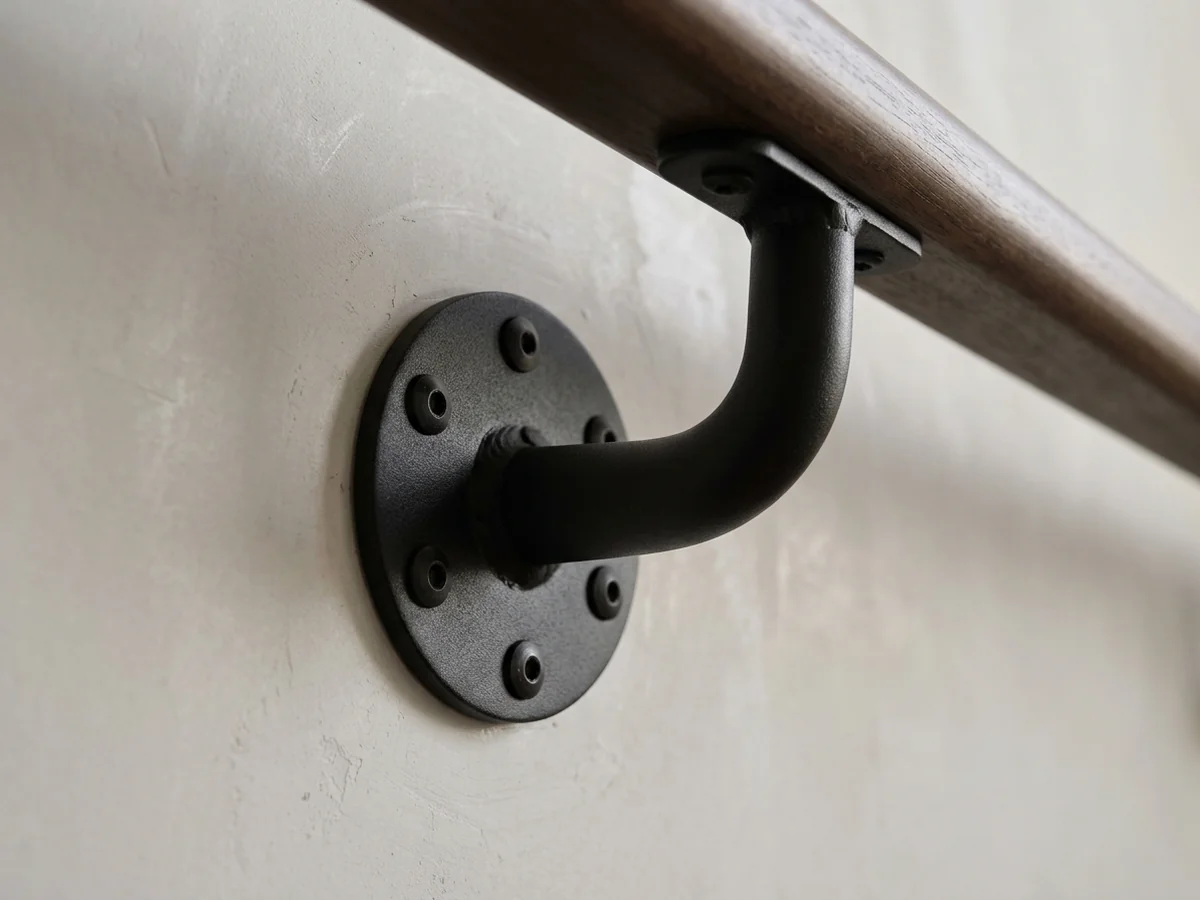
The structural integrity of a handrail system is independent of its aesthetic coating, though the finish quality influences long-term performance. According to the International Building Code (IBC) and Occupational Safety and Health Administration (OSHA), handrail hardware must be capable of withstanding a concentrated load of at least 200 pounds applied in any downward or outward direction.
For modern hardware, powder coating is widely considered to provide a more durable finish for matte black components than standard liquid spray paint. This process involves applying a dry powder that is cured under heat, creating a hard, protective shell. This method offers superior resistance to impact and abrasion compared to traditional paint, which is crucial for high-touch surfaces like handrails.
Environmental factors play a significant role in the longevity of these finishes. Hardware installed in exterior or humid environments faces constant exposure to moisture and temperature fluctuations. While powder coating provides a robust barrier, moisture ingress at mounting points or microscopic fissures can lead to oxidation beneath the coating. Regular inspections help identify any degradation before it compromises the appearance or structural integrity of the support.
Proper surface preparation remains essential for maintaining both the safety and the matte black aesthetic of the hardware. Before installation, the substrate must be clean and free of contaminants to ensure that fasteners and brackets sit flush against the wall surface. Any movement caused by poor contact during installation can place unnecessary stress on the finish, leading to premature chipping or peeling at the contact points.
Beyond the finish, material selection often influences overall reliability. Common industry practice suggests that stainless steel components typically offer higher tensile strength compared to zinc alloy or cast iron alternatives. Regardless of the material or finish, ensuring that the installation connects securely to structural members is the primary factor in meeting the required 200 pound load threshold. Maintaining these standards ensures that the hardware remains both visually appealing and fully compliant with safety regulations.
Installation and Structural Support

The total weight capacity of a handrail system depends on the combined integrity of the bracket, the fasteners, and the wall substrate. To meet safety standards, such as the International Building Code (IBC) requirement that handrails withstand a concentrated load of 200 pounds, every component must be secured into robust structural members. Similarly, the Occupational Safety and Health Administration (OSHA) mandates that handrails must withstand at least 200 pounds of force applied in any downward or outward direction. When considering the matte black handrail brackets weight limit, you must ensure that your installation method accounts for the physical limitations of each connection point.
A structural handrail bracket installation is only as reliable as its weakest attachment point. Even a high-strength bracket will fail if the fasteners pull out of the mounting surface or if the wall substrate itself lacks sufficient density to hold the hardware under pressure. Proper installation involves creating a chain of support where the force is transferred from the rail through the bracket and into the building frame.
- Select high-quality fasteners that are long enough to penetrate deep into solid wood studs or structural blocking.
- Ensure the wall substrate is free of damage or decay to prevent fastener slippage under load.
- Verify that the mounting plate of the bracket sits flush against the wall surface to prevent unnecessary leverage or wobbling.
- Avoid mounting brackets solely into drywall or plaster, as these materials cannot support the required weight capacity on their own.
- Check that every screw is tightened to the manufacturer specifications without stripping the threads or damaging the surrounding wood.
- Confirm that all components of the system are compatible with the intended load-bearing environment before final assembly.
The interaction between these elements is critical. If your fasteners are undersized or the bracket is mounted into hollow space, the system will not meet standard safety requirements regardless of how strong the hardware is rated. Always prioritize a direct connection to the structural framing of the building to maintain the stability of your handrail system.
Spacing and Weight Distribution

The structural integrity of a handrail system relies on proper bracket placement, which ensures the assembly meets safety standards for load-bearing capacity. Both the International Building Code (IBC) and the Occupational Safety and Health Administration (OSHA) require handrails to withstand a concentrated load of at least 200 pounds applied in any downward or outward direction. Achieving this level of performance requires careful consideration of how weight is distributed across the entire length of the railing.
Load Capacity and Material Selection
When selecting hardware, such as a square matte black handrail support, the material composition plays a significant role in overall performance. While specific load testing varies by manufacturer, industry practice generally recognizes that stainless steel handrail brackets offer higher tensile strength than zinc alloy or cast iron alternatives. If you are opting for a matte black finish, note that powder coating typically provides a more durable and wear-resistant surface than standard liquid spray paint, which is particularly important for high-traffic areas or exterior environments where corrosion resistance is necessary.
| Material Type | Typical Tensile Strength | Finish Durability |
|---|---|---|
| Stainless Steel | High | Excellent |
| Zinc Alloy | Moderate | Good |
| Cast Iron | Variable | Moderate |
Best Practices for Structural Installation
To ensure consistent handrail bracket load capacity, the weight must be shared effectively across all installed supports. Proper spacing prevents localized stress that could lead to sagging or mechanical failure. When planning your layout, avoid excessive spans between supports, as these can create leverage points that compromise the system even if the individual hardware components are rated for high loads.
For a compliant structural handrail bracket installation, verify that your fasteners are securely anchored into structural members. The total strength of the system depends on the connection between the hardware and the wall substrate, such as wood studs or solid blocking. By maintaining even weight distribution and adhering to the 200-pound load requirement mandated by the IBC and OSHA, you ensure the safety and longevity of the installation. Always consult local municipal guidelines for specific residential or commercial requirements that may exceed these baseline safety standards.
Design Impact on Load Capacity

The structural performance of hardware with an angular profile depends on its geometry and mounting surface area, though safety benchmarks remain constant regardless of shape. The International Building Code requires handrails to withstand a concentrated load of 200 pounds. Additionally, the Occupational Safety and Health Administration requires handrails to withstand a force of at least 200 pounds applied in any downward or outward direction. These regulatory standards define the minimum safety threshold for all stair systems, whether they utilize modern square profiles or traditional circular ones.
Traditional circular brackets typically feature a compact mounting footprint that centers force directly over the attachment point. Square alternatives often present a larger, linear mounting plate which may alter how stress is transferred to the wall substrate. While the visual aesthetic of a square profile aligns with contemporary design trends, the functional capacity depends more on the material composition and the physical connection to the wall than on the outer geometry of the bracket itself.
Aesthetic preferences for clean, angular lines often drive the choice for this style of hardware in modern staircases, yet these must not supersede the necessary structural requirements. Designers should prioritize components manufactured from materials with high tensile strength, such as stainless steel, which is commonly regarded as more durable than zinc alloy or cast iron alternatives. Regardless of the bracket shape, the finish is equally important for longevity, as powder coating generally provides a more resilient surface for matte black hardware than liquid spray paint.
- Ensure the bracket design allows for secure anchoring into the structural framing behind the wall finish.
- Verify that the chosen matte black hardware is rated to meet the 200-pound load requirement mandated by building authorities.
- Monitor the connection points periodically, as the sleek profile of square hardware may highlight any hardware loosening or material wear over time.
Professional Inspection and Compliance

You must consult a professional contractor or your local building official when you are unsure about the structural integrity of your wall mountings or when installing systems in a commercial environment. These authorities provide the final word on whether your specific hardware and installation methods meet the legal standards for your jurisdiction.
Always verify local amendments to the International Building Code (IBC) or the International Residential Code (IRC) before beginning your project. While the IBC requires handrails to withstand a concentrated load of 200 pounds, and OSHA mandates that handrails support a force of at least 200 pounds applied in any downward or outward direction, your city or county may have stricter requirements. Ignoring these local code modifications can result in safety hazards and non-compliance during inspections.
Regular maintenance ensures that your supports remain safe over time. Use this checklist to inspect your existing handrail system for potential movement or degradation:
- Check for any visible gaps between the mounting plate and the wall surface that could indicate loose fasteners.
- Apply firm pressure to the handrail at each bracket location to detect any wobbling or movement.
- Inspect the metal surface for signs of rust or corrosion, particularly if the hardware is located in a high-humidity area.
- Verify that all screws are tightened securely and are not stripping the material behind the wall.
- Ensure the handrail itself remains rigid and does not flex excessively between the support points.
- Look for cracks or stress fractures in the brackets, which may suggest that the hardware is nearing the end of its functional life.
While many opt for the modern look of powder-coated matte black hardware, remember that the structural safety of the rail depends on a solid connection to the wall. If you notice any persistent movement during your inspection, remove the load from the rail and consult a professional to determine if the brackets or the wall backing require reinforcement.
Understanding Matte Black Handrail Brackets Weight Limit Requirements
Selecting hardware for a staircase requires balancing aesthetic preferences with rigorous safety standards. For matte black handrail brackets, the primary concern is ensuring the installation meets established load capacity requirements. Regulatory bodies set these thresholds to ensure that handrail systems can safely support individuals under normal usage conditions.
Regulatory Compliance and Load Standards
The International Building Code (IBC) requires handrails to be able to withstand a concentrated load of 200 pounds. This standard is designed to ensure consistent structural integrity regardless of the hardware’s finish or geometry. Similarly, the Occupational Safety and Health Administration (OSHA) requires handrails to withstand a force of at least 200 pounds applied in any downward or outward direction. These figures serve as the minimum threshold for any structural handrail bracket installation. When evaluating matte black handrail hardware, you must verify that the components are engineered to meet these specific IBC handrail load requirements.
Material Considerations and Durability
While the bracket is a critical component, how much weight the entire assembly can hold depends on the fasteners and the mounting surface. In terms of material strength, stainless steel handrail brackets typically offer higher tensile strength than zinc alloy or cast iron alternatives. This durability is particularly important when the hardware must support heavier handrail materials or accommodate high traffic areas.
When choosing a matte black finish, the method of application significantly impacts longevity. Powder coating generally provides a more durable and wear-resistant finish compared to standard liquid spray paint. This is an essential factor for maintaining the aesthetic quality of the hardware over time, as it resists chipping and environmental degradation more effectively. Before finalizing your selection, ensure that the chosen hardware is rated for its intended use, whether in a residential or commercial setting, to guarantee long-term performance and adherence to safety mandates.
FAQ
How much weight can a handrail support?
According to the International Building Code, a handrail must be able to withstand a concentrated load of 200 pounds. This requirement applies to the entire system to ensure user safety under normal conditions.
What is the OSHA handrail rule?
OSHA regulations require that handrails withstand a force of at least 200 pounds applied in any downward or outward direction. This standard is designed to prevent structural failure in both industrial and commercial environments.
Is there a specific weight limit for matte black brackets?
There is no distinct weight limit specific to the color of the bracket, but the underlying material determines its strength. Always verify that your chosen brackets are rated to meet the 200-pound load requirement set by building codes.
Do square brackets hold more weight than round ones?
The shape of the bracket does not inherently dictate its load capacity. Structural integrity is primarily determined by the material composition and the quality of the installation rather than the geometric profile of the hardware.
Conclusion
To ensure your installation meets safety standards, always verify that your hardware complies with the 200 pound load requirement mandated by both the International Building Code and OSHA. When selecting matte black handrail brackets weight limit specifications, prioritize components constructed from materials with high tensile strength, such as stainless steel, which often provide superior performance compared to zinc alloy or cast iron alternatives. If you are unsure about the structural capacity of your chosen hardware, consult with a licensed contractor or local building inspector before finalizing your installation. This step ensures that your handrail system remains both visually appealing and fully compliant with all necessary safety regulations.
Sources: seattle.gov, osha.gov
You might also like: What Is the Standard Code Height for a Stair Handrail from Tread Nose?