
The 4-Inch Sphere Rule: Why Building Inspectors Fail Wider Baluster Gaps
The 4-Inch Sphere Rule is a fundamental safety standard in residential construction, designed specifically to prevent small children from becoming trapped in stairways and deck railings. When building inspectors fail a project due to wider baluster gaps, they are enforcing a life-safety code that leaves no room for interpretation or aesthetic preference.
Understanding this regulation is essential for any contractor, homeowner, or DIY enthusiast working on elevated structures. By grasping how the inspection process works and why these specific dimensions exist, you can ensure your project passes the first time, avoiding costly rework and potential safety hazards that could lead to serious injury or legal liability.
The Core Concept of the 4-Inch Sphere Rule
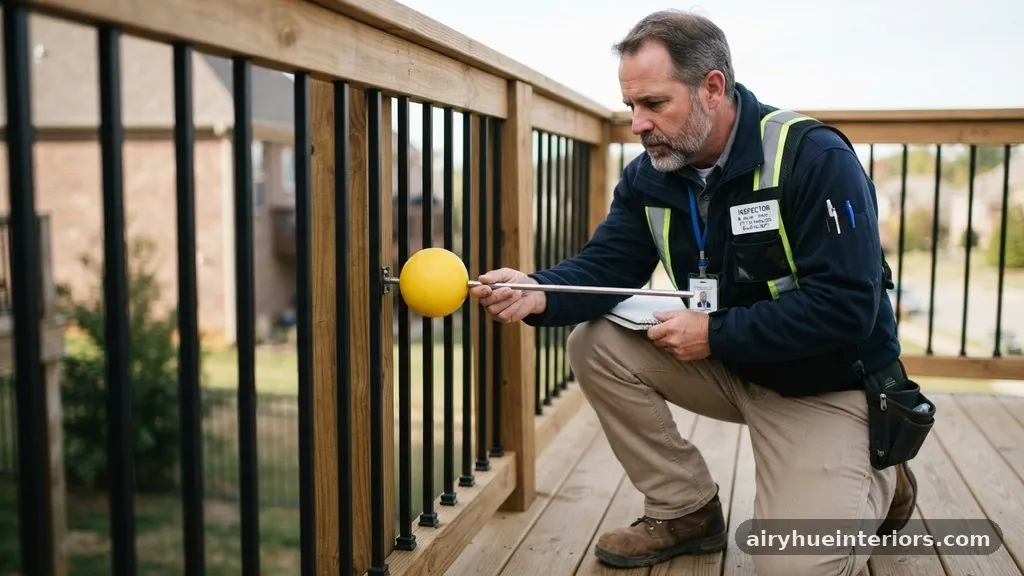
The primary purpose of the 4-Inch Sphere Rule is to restrict the size of any opening in a guard or railing system. It dictates that a rigid sphere measuring 4 inches in diameter must not be able to pass through any space in the railing. This includes the gaps between individual balusters, the space between the bottom rail and the stair treads, and any openings created by decorative elements.
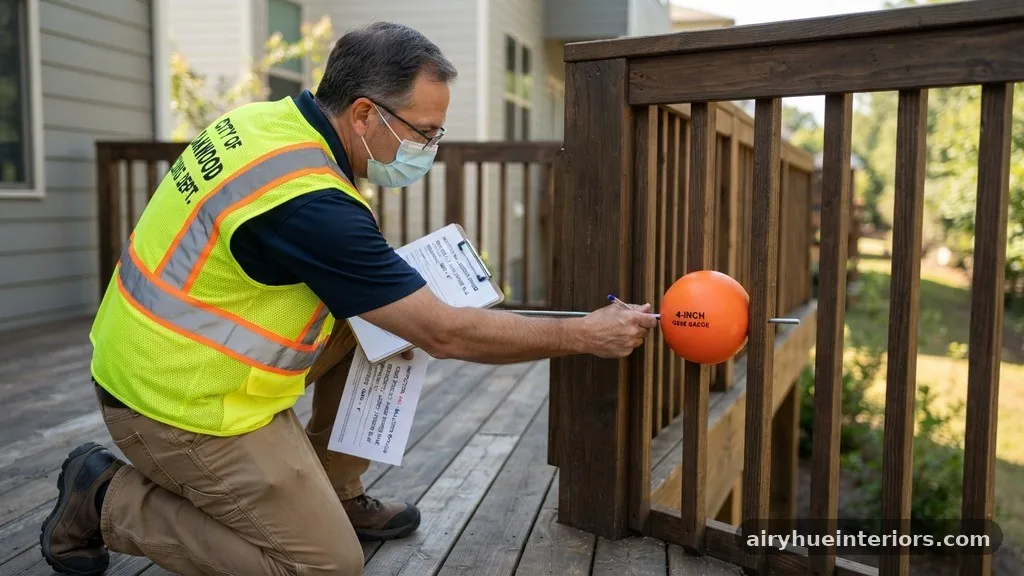
Inspectors use this physical tool to verify compliance on-site. If the sphere fits through even a single gap, the railing fails the inspection immediately.
This rule exists because a young child’s head is approximately 4 inches in diameter. If a child can fit their head through a gap, their torso may also pass through, but their head can become stuck, leading to a risk of strangulation or entrapment.
The regulation is not arbitrary; it is a direct response to historical accident data involving children and open railings. While some might argue that a slightly wider gap looks better or is easier to build, the safety of the end user remains the absolute priority under the International Residential Code (IRC).
Why Inspectors Fail Wider Gaps
When an inspector arrives at a site, they are not looking for perfection in craftsmanship, but they are looking for strict adherence to safety standards. A gap measuring 4.1 or 4.2 inches might seem negligible to a builder, but it represents a failure to meet the code.
Inspectors often carry a physical 4-inch sphere as part of their standard kit. They will test multiple locations along the stair or deck, particularly where the spacing might be uneven due to natural wood expansion or minor installation errors.
If a gap is found to be too wide, the inspector has no choice but to flag it. They cannot make exceptions based on the age of the home or the type of materials used. For a builder, this means removing the affected sections of the railing, repositioning the balusters, and re-securing the entire system.
This process is time-consuming and expensive. Most inspectors will require a re-inspection after the corrections are made, which can lead to further delays in project timelines.
The Science of Safety and Measurement
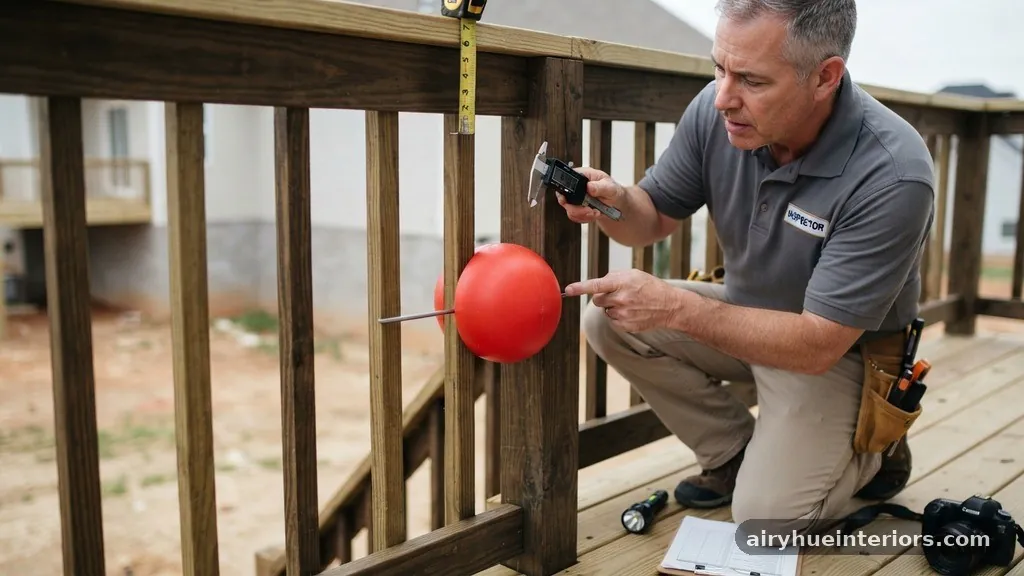
The measurement of 4 inches is a calculated limit based on anthropometric data regarding child development. Human factors engineering suggests that the 4-inch limit is the threshold at which the risk of head entrapment is significantly mitigated.
It is important to note that the measurement must be taken at the most restrictive point. Even if a gap is 3.5 inches at the bottom but widens to 4.5 inches at the top due to a leaning baluster, the system fails.
Construction professionals often use templates or spacers during the installation of balusters to ensure consistent spacing. Without these tools, human error frequently leads to “creeping” gaps, where the distance between pickets slowly increases over the length of a run.
If the total distance is not perfectly divided, the final gap is often the one that violates the rule. Precision in the planning phase is the only way to avoid the frustration of a failed inspection.
Common Areas of Failure in Railing Systems
While the spacing between balusters is the most common point of failure, other areas of a railing system can also trigger a failed inspection. The “triangle” formed by the bottom rail, the stair riser, and the stair tread is a notorious trouble spot.
If the distance from the nose of the tread to the bottom rail exceeds the specified limit, it is considered a hazard. Inspectors will check the space underneath the bottom rail of a deck guardrail just as rigorously as they check the vertical pickets.
Furthermore, horizontal railings, such as cable systems, are subject to the same requirements. Because the cables can deflect under pressure, inspectors may apply force when testing the 4-inch sphere rule.
If the cable moves enough to allow the sphere to pass through under a standard load, the system is deemed non-compliant. This makes the tensioning of cables a critical part of the installation process.
Differences Between Residential and Commercial Codes
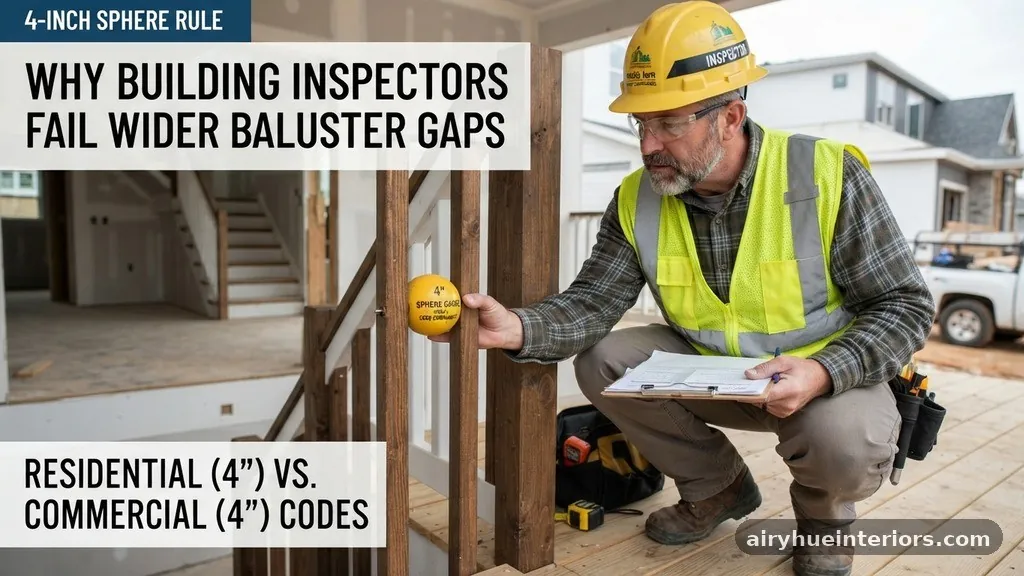
It is vital to distinguish between residential and commercial building requirements. While the 4-inch sphere rule is standard for residential projects under the IRC, commercial buildings often fall under the International Building Code (IBC).
In some commercial settings, the requirements for guardrail height and load capacity are more stringent. However, the 4-inch sphere rule remains a consistent safety benchmark across almost all modern building codes.
Always check with your local jurisdiction before starting construction. Some municipalities adopt specific amendments to the national codes that might alter the interpretation of the 4-inch rule or its application in unique architectural designs.
Assuming that the national code is the final word can be a mistake, as local ordinances can sometimes be even stricter than the standard IRC. Your local building department can provide you with the specific documentation for your area.
Materials and Their Impact on Compliance
The material used for the railing system dictates how you must approach the 4-inch spacing requirement. Wood, for example, is subject to moisture content changes.
If you install wood balusters that are slightly too dry, they may shrink as they acclimate to the environment, widening the gaps over time. Conversely, metal balusters are more stable but require precise mounting hardware to maintain their position.
Glass infill panels are another popular choice that changes how the rule is applied. With glass, there are no “gaps” in the traditional sense, but the inspector will check the mounting points and the edges.
If the glass is not properly secured, it could shift, creating a gap that exceeds the 4-inch limit. Every material requires a different strategy to ensure that the final installation remains within the regulatory boundaries.
Managing Project Timelines and Inspections
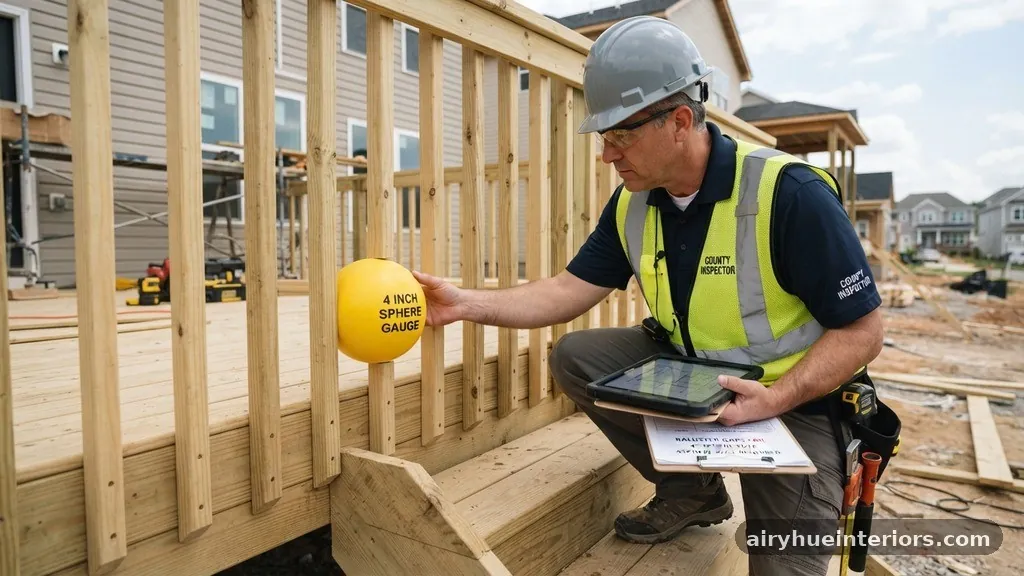
A failed inspection is more than just a nuisance; it is a significant financial hit. If you are a contractor, it affects your profit margin and your reputation with the client.
To mitigate these risks, many professionals perform a “pre-inspection” of their own work. They walk the railing with a 4-inch sphere, checking every single interval before calling the building department.
If you are a homeowner doing the work yourself, do not hesitate to ask the building inspector for guidance during the framing phase. Many inspectors are willing to look at a small, non-finished section to ensure your plan is on the right track.
Taking this step can save you from having to tear apart a finished, painted, or stained railing system later. You can find detailed resources on safety standards at the International Code Council website.
Table: Common Railing Inspection Failure Points
| Component | Common Failure Cause | Inspection Action |
|---|---|---|
| Baluster Gap | Spacing exceeds 4 inches | Insertion of 4-inch sphere |
| Bottom Rail | Gap between rail and deck/tread | Measurement at highest point |
| Cable Railing | Excessive cable deflection | Application of lateral force |
| Glass Infill | Improperly secured mounting | Checking for gap movement |
| Stair Triangle | Open space between riser and rail | Checking for sphere passage |
Best Practices for Consistent Spacing
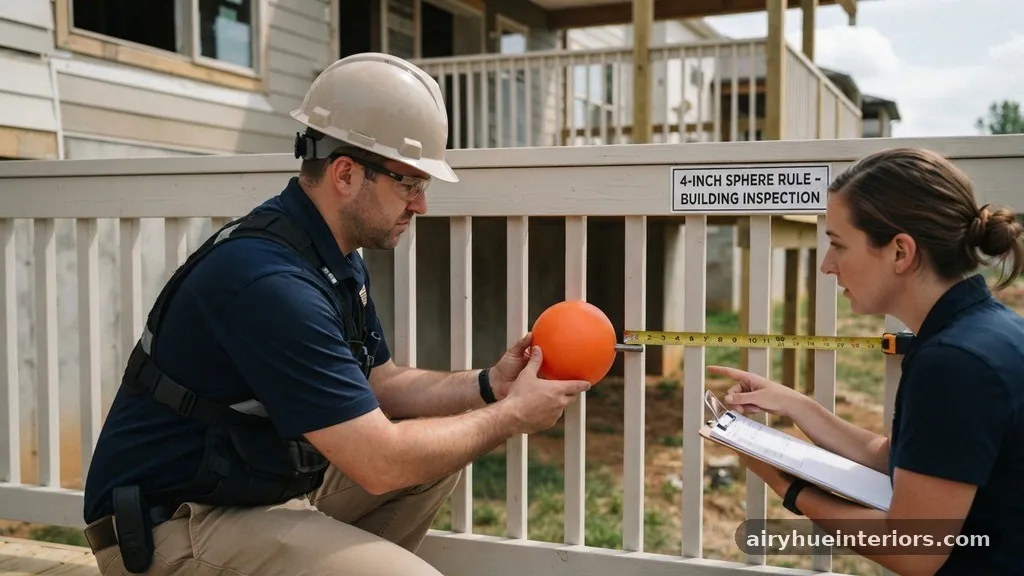
To ensure your railing passes the 4-inch sphere rule, use a dedicated spacer block for every single interval. Do not measure and mark each spot with a tape measure, as the cumulative error of a pencil line can lead to a violation.
A physical block of wood or plastic cut to the exact desired spacing ensures that every gap is identical. If your design requires a gap of 3.5 inches, use a 3.5-inch block.
It is also important to account for the thickness of the balusters themselves when calculating the layout. Start your measurement from a fixed point, such as a post, and work your way across the span.
If the final gap is going to be wider than 4 inches, you must adjust the spacing of all preceding balusters to distribute the difference evenly. This ensures that no single gap exceeds the safety limit, keeping the entire run compliant.
FAQ: Common Questions About the 4-Inch Sphere Rule
Can I use a larger sphere if my local building department allows it?
No, the 4-inch sphere rule is a safety standard that is rarely, if ever, relaxed by local authorities. Because it is based on the physical size of a child’s head, the risk of injury remains the same regardless of local preferences.
Does the rule apply to horizontal railing designs?
Yes, the 4-inch sphere rule applies to any open space in a railing system, including those in horizontal or cable-style designs. If the sphere can pass through the gap between horizontal members, the system is non-compliant.
What happens if my balusters move over time due to wood shrinkage?
If your installation fails an inspection years later due to shrinkage, you are still responsible for the safety of the structure. It is best to use kiln-dried lumber or alternative materials like composite or metal to minimize the risk of significant movement.
Can I install a decorative mesh to cover a wider gap?
In some cases, adding a secondary barrier like a mesh or acrylic panel can bring a non-compliant railing up to code. However, you must first clear this with your local building inspector to ensure the specific fix is acceptable and permanent.
Is the 4-inch rule the same for both stairs and level decks?
Yes, the requirement for a 4-inch clear opening is consistent throughout the International Residential Code for both stairs and level guards. The inspector will verify this dimension across all parts of your railing system.
Ensuring Long-Term Compliance
Building a railing that passes the 4-inch sphere rule is about more than just checking a box for an inspector; it is about creating a secure environment for families. When you prioritize these dimensions, you are building in a level of safety that protects against common household accidents. By using consistent spacing methods, checking your work with a test sphere, and staying informed about code updates, you can produce a result that is both aesthetically pleasing and structurally sound.
If you ever find yourself uncertain about a specific detail of your railing design, reach out to your local building department before you spend money on materials. They would much rather provide guidance on the front end than fail a finished project on the back end.
Maintaining a professional, proactive relationship with your local inspectors is the best way to keep your projects on track and ensure the safety of everyone who uses your stairs and decks. By following the 4-Inch Sphere Rule, you contribute to a safer built environment for everyone.